

Handing the IRS a bonus by selling a big stock position without planning is more common than you think.
Before you click sell, map the tax impact, lot by lot, year by year, and against your other income.
This post lays out a clear, step-by-step plan to keep more of your proceeds: identify high-basis lots, time sales across tax years, harvest losses, and use charitable giving when it fits.
You’ll get the exact actions to take before trade date and the documents to save, so you avoid surprises and pay as little tax as legally possible.
Immediate Capital Gains Planning Steps for a Large Stock Sale

Pull up your brokerage account and sort your position by tax lot. You need to see exactly how much gain is sitting in each lot, when you bought it, and what you originally paid. That cost basis (what you paid plus any adjustments) determines the size of your taxable gain. If you’ve held shares for more than one year, they qualify for long-term capital gains treatment, which can cut your tax rate by more than half compared to short-term rates.
Before you sell a single share, forecast what your taxable income will look like for the year. Include salary, bonuses, RSU vest dates, and any other income events. Then compare that total to the capital gains brackets. For example, if you’re married filing jointly, you can realize long-term capital gains at 0% on income up to $98,900, at 15% up to $613,700, and at 20% above that threshold. If your income’s already high, splitting the sale into portions (say, end of 2026, part in 2027, and the rest early 2028) spreads the gains across three tax years and may keep you out of the next bracket.
Work through these steps before you sell:
- Calculate your unrealized gain by lot and confirm which lots have been held more than one year.
- Estimate your total taxable income for the current and next two tax years, including any irregular income like bonuses or windfalls.
- Decide whether to sell the entire position at once or break it into tranches spread over multiple years.
- Identify high basis shares or loss candidates in other holdings that can offset part of the gain.
- Set a timeline and price range you’re comfortable with, knowing that waiting across tax years creates market risk if the stock drops.
Capital Gains Tax Framework for Large Stock Sales

Holding period is the first tax decision you control. Assets held one year or less are taxed as ordinary income, which means rates up to 37%. Assets held more than one year qualify for long-term capital gains rates of 0%, 15%, or 20%, depending on your taxable income and filing status. That difference can represent tens of thousands of dollars on a six-figure sale.
Income thresholds reset each year. In 2026, married couples filing jointly can realize long-term gains at 0% up to $98,900 of taxable income. The 15% bracket extends up to $613,700, and anything above that gets taxed at 20%. Single filers have lower thresholds. If your income already sits near a bracket boundary, even a modest sale can push part of your gain into the next tier.
High earners face an additional 3.8% Net Investment Income Tax (NIIT) on investment income when modified adjusted gross income exceeds $250,000 for joint filers or $200,000 for singles. A large sale can trigger NIIT for the first time or expand how much of your gain is subject to it. That means effective rates can reach 23.8% at the top federal bracket before adding state taxes. Filing status, timing, and bracket management all matter before you execute the trade.
Cost Basis Optimization Techniques for Minimizing Capital Gains

Your cost basis is what you paid for shares plus any reinvested dividends or corporate actions that adjusted the purchase price. Most brokers default to first in, first out (FIFO), which means they sell your oldest shares first. If those shares have the lowest cost basis, FIFO maximizes your taxable gain. You can override that by using the specific identification method, which lets you tell your broker exactly which lots to sell.
When you identify specific lots, you can choose shares with the highest cost basis to minimize the gain, or you can mix in a few low basis shares to stay within a tax bracket sweet spot. The key is to give your broker clear instructions before the trade settles. Most platforms let you select lots online, but you should also confirm in writing and save a record. The IRS expects you to identify lots by the settlement date, not the trade date, so move quickly.
Using Lot Identification to Reduce Gains
Say you bought 100 shares at $50, another 100 at $80, and a final 100 at $120. The stock’s now $150. If you sell 100 shares under FIFO, your gain is $10,000. If you specifically identify the $120 lot, your gain’s just $3,000. That’s $7,000 of taxable gain you’ve eliminated with one instruction. Make sure the lot you select meets the one year holding requirement if you want long-term treatment. Check the purchase date on your account records, not the date you opened the position.
Document everything. Print the trade confirmation that shows the lot, save your written instruction to the broker, and keep the year end statements that list each lot’s acquisition date and basis. The IRS can and does audit cost basis reporting, especially on large sales. If you can’t substantiate which shares were sold, the IRS may assume FIFO or zero basis. Both increase your tax.
Using Tax Loss Harvesting to Offset Large Stock Sale Gains

Realized capital losses offset realized capital gains dollar for dollar. If you’re planning a $100,000 gain, selling other holdings at a $20,000 loss drops your net taxable gain to $80,000. Losses in excess of gains can offset up to $3,000 of ordinary income in a single year, and any remaining losses carry forward indefinitely to future years. That carryforward’s a powerful planning tool if your sale creates a multi year gain event.
The wash sale rule blocks you from claiming a loss if you repurchase the same or a substantially identical security within 30 days before or after the sale. To preserve the loss, wait at least 31 days before buying back, or buy a similar but not identical holding during the waiting period. For example, if you sell shares of a semiconductor ETF at a loss, you can immediately buy a different semiconductor ETF with overlapping but not identical holdings. Coordinate this with your advisor to avoid triggering the rule by accident.
Common scenarios where loss harvesting offsets large gains:
You hold multiple positions in your taxable account and several are underwater. Sell the losers in the same year you realize the winner.
You sold earlier in the year and locked in gains. Harvest losses before December 31 to offset those gains on the same year’s return.
You expect a large RSU vest or bonus next year. Carry losses forward and use them to offset next year’s income.
You want to rebalance but are reluctant to sell winners. Pair gain realization with loss realization to stay tax neutral while repositioning the portfolio.
Timing Strategies Across Tax Years for Lower Capital Gains Taxes
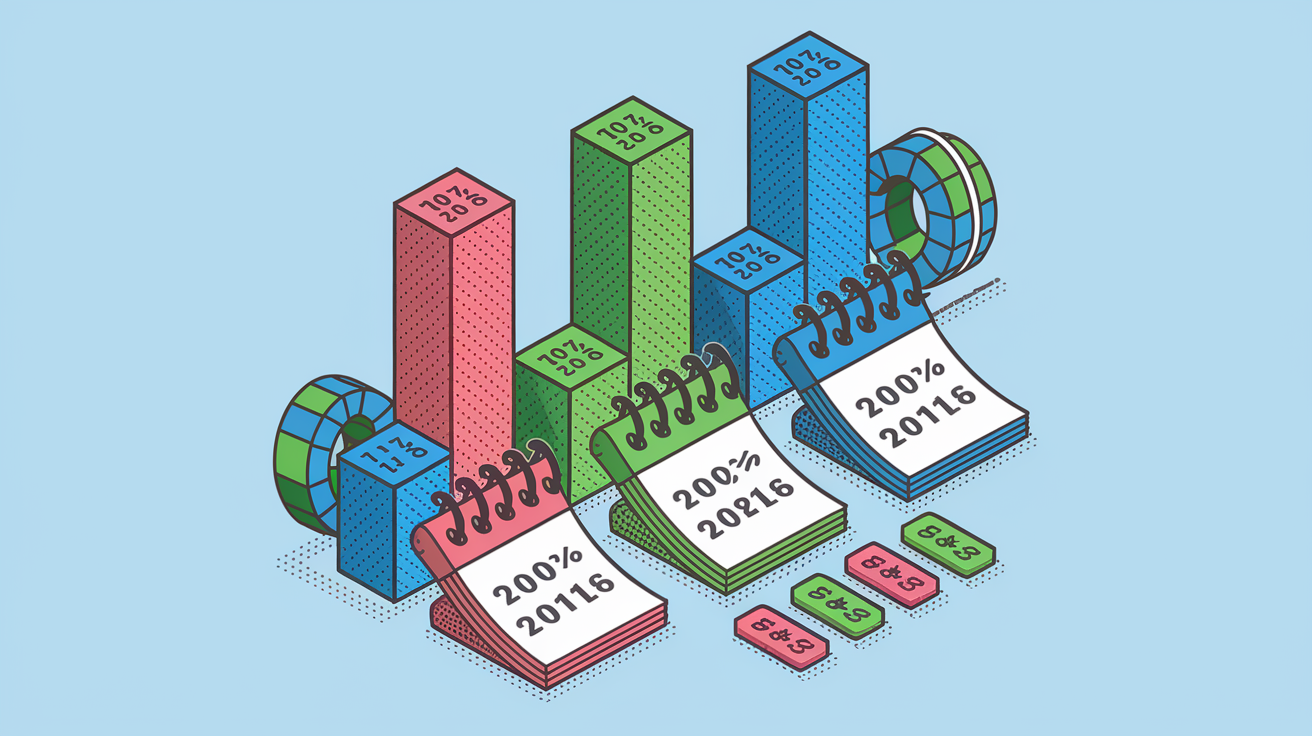
Splitting a large sale across multiple tax years can keep each year’s gain within a lower bracket or allow you to use annual loss offsets and the $3,000 ordinary income deduction multiple times. For example, selling $200,000 of stock in one year might push you into the 20% long-term capital gains bracket. Selling $70,000 at the end of 2026, $70,000 in mid 2027, and the remaining $60,000 in early 2028 spreads the gain over three returns and may keep each slice in the 15% or even 0% bracket if your other income’s low in those years.
Lower income years are rare planning opportunities. If you’re between jobs, taking a sabbatical, retiring, or experiencing a temporary income drop, that’s the year to realize gains. Married couples filing jointly with taxable income under $98,900 pay 0% on long-term capital gains up to that threshold. Even if you’re slightly above the cutoff, filling the 0% bucket and spilling a small amount into the 15% bracket is far better than realizing the entire gain in a high income year at 20% plus NIIT.
Execute timing with these steps in mind:
- Model your income for the current year and the next two using salary, bonuses, vesting schedules, and other predictable events.
- Identify the tax year with the lowest projected income and target that year for the largest sale tranche.
- Check the current stock price and set a floor. If the stock falls 10% while you wait, the tax savings may be wiped out by the price decline, so weigh tax efficiency against market risk and your need for liquidity.
Charitable Strategies to Reduce or Eliminate Capital Gains on a Large Sale

Donating appreciated securities you’ve held more than one year to a qualified charity allows you to avoid capital gains tax on the appreciation and potentially deduct the fair market value of the shares, subject to income limits. If you donate $50,000 of stock with a $10,000 cost basis, you eliminate $40,000 of taxable gain and may claim a $50,000 charitable deduction. That deduction’s limited to a percentage of your adjusted gross income (generally 30% for appreciated securities donated to public charities) so high value donations may need to be spread across multiple years or paired with a bunching strategy.
Bunching contributions into a single year can push your total itemized deductions above the standard deduction, which in 2026 is around $30,000 for married couples filing jointly. If you normally give $10,000 a year, consider donating $30,000 or $40,000 in one year to exceed the standard deduction, then take the standard deduction in the following years. This turns three years of modest giving into one large tax benefit.
Donor advised funds (DAFs) let you realize the tax benefit immediately while distributing grants over time. You contribute appreciated stock to the DAF in the year of your large sale, claim the deduction that year to offset the sale’s tax impact, and then recommend grants to charities over the next several years. The stock’s sold inside the DAF with no capital gains tax, and the proceeds sit in the fund until you direct them to your chosen organizations.
When to Use Donor Advised Funds
A DAF makes sense when your income spikes in a single year (such as during a major stock sale, bonus, or liquidity event) and you want to lock in the deduction before your tax rate drops in future years. It’s also useful if you’re not certain which charities you want to support or if you want to grant funds gradually but need the deduction now. The setup’s straightforward. Open an account with a DAF sponsor, transfer the appreciated shares in kind, and provide a record of the transfer and fair market value for your tax return. Keep documentation of the holding period to prove the shares were held more than one year.
Gifting Appreciated Stock to Family Members in Lower Tax Brackets

Lifetime gifts of appreciated stock transfer your carryover cost basis to the recipient. If you bought shares at $10 and they’re now worth $100, the person receiving the gift inherits your $10 basis. When they sell, they realize the $90 gain and pay tax at their own rate. If the recipient’s in a lower tax bracket (especially if their income qualifies them for the 0% long-term capital gains rate) they may pay zero tax on that $90 gain while you would have paid 15% or 20%.
Annual gift tax exclusion rules let you transfer up to a set amount per recipient per year without filing a gift tax return or using any of your lifetime exemption. In 2026, that exclusion’s expected to be around $18,000 per person, so a married couple can gift $36,000 to a child, $36,000 to a daughter in law, and so on, in a single year without triggering gift tax or reporting. Larger transfers count against your lifetime exemption, which is in the millions, but require a gift tax return.
Key considerations when gifting stock to family:
The recipient must be in a genuinely lower tax bracket. Check their income and filing status before transferring shares.
Gifts to children under 19 (or under 24 if they’re full time students) may trigger the “kiddie tax,” which taxes unearned income above a threshold at the parents’ rate, eliminating the benefit.
Transfers are irrevocable. You lose control of the shares and any future appreciation belongs to the recipient, not you.
Using Installment Sales and Qualified Opportunity Funds to Defer Recognition
An installment sale allows you to recognize gain over the years in which you receive payments rather than all at once. This is most common in private sales of closely held stock or real estate, but it can apply to certain structured transactions. You spread the tax across multiple years, which can keep you in a lower bracket each year and defer cash taxes until you actually receive the proceeds. The downside is complexity. You must charge interest on the deferred payments, report interest income annually, and comply with strict IRS rules. If the buyer defaults, you may have already paid tax on money you never collect.
Qualified Opportunity Funds (QOFs) offer deferral and potential exclusion benefits if you reinvest capital gains into a designated fund within 180 days of the sale. The gain’s deferred until you sell your QOF investment or December 31, 2026, whichever comes first. If you hold the QOF investment for at least ten years, any appreciation in the QOF is excluded from tax entirely. QOF rules are complex and time sensitive. Missing the 180 day deadline or failing to meet holding period requirements can eliminate the benefit.
| Strategy | Benefit | Key Risks |
|---|---|---|
| Installment Sale | Spread gain recognition over multiple years; match tax to cash receipts | Buyer default risk; interest income; complex reporting; limited to certain transaction types |
| Qualified Opportunity Fund | Defer gain to 2026 or sale date; exclude QOF appreciation after 10 years | Strict 180 day reinvestment deadline; limited QOF investment options; holding period requirements; program complexity |
Tax Advantaged Accounts and Their Role in Planning Large Sales

Sales inside traditional IRAs or 401(k)s generate no immediate capital gains tax. The sale’s invisible to the IRS when it happens. Instead, you pay ordinary income tax on every dollar you withdraw, whether that dollar came from gains, contributions, or dividends. If you’re planning a large sale and the stock’s held in a taxable account, you can’t move it into an IRA to avoid tax. Transfers of appreciated securities into retirement accounts are prohibited.
Roth accounts work differently. Qualified withdrawals from a Roth IRA or Roth 401(k) are entirely tax free, which means you can sell appreciated stock inside the Roth and never pay tax on the gain. To qualify, the account must be open for at least five years and you must be 59½ or meet another exception. If you expect to hold a concentrated position for many years and can afford to fund a Roth, consider directing future contributions or conversions into the Roth to build a tax free bucket for long-term winners. Just remember that Roth conversions themselves trigger ordinary income tax in the year of conversion.
Post Sale Portfolio Diversification and Reinvestment Considerations

Reinvesting the proceeds from a stock sale doesn’t reduce or eliminate the capital gains tax you owe on the original sale. The tax is triggered the moment you sell, regardless of where the cash goes next. Reinvestment does reset your cost basis to the new purchase price, which can reduce future gains if you buy at a higher price, but it offers no immediate tax relief.
Mutual funds can generate unexpected tax bills even when you don’t sell. Fund managers trade inside the portfolio, and when they realize net gains, those gains are distributed to shareholders annually. You owe tax on those distributions even if you reinvest them automatically. Low turnover index ETFs produce fewer taxable distributions because they trade less frequently, making them a more tax efficient choice in taxable accounts after a large sale.
Simple reinvestment tactics to reduce future tax drag:
Direct new cash into ETFs with low turnover and broad diversification to minimize taxable distributions while you rebalance.
Use tax loss harvesting to offset any embedded gains that surface when you reposition the portfolio after the sale.
Hold actively managed funds or high turnover strategies in IRAs or 401(k)s where distributions are shielded from current tax.
Documentation, Reporting, and Professional Guidance for a Large Stock Sale
Your broker will issue a Form 1099-B reporting every sale, including the proceeds, cost basis, holding period, and whether the transaction was short-term or long-term. If you used specific identification to select high basis lots, confirm that the 1099-B reflects the correct lots before you file your return. Mismatched basis reporting can trigger IRS matching notices and require amended returns.
You report capital gains and losses on Form 8949, which feeds into Schedule D of your Form 1040. Each transaction’s listed separately, along with adjustments for wash sales or basis corrections. If you sold dozens of lots or harvested multiple losses, the form can run several pages. Most tax software imports 1099-B data automatically, but you must manually enter adjustments for charitable donations of stock, gifted shares, or installment sale elections.
Keep records beyond the tax filing deadline. The IRS can audit returns for three years after filing, or six years if they suspect underreporting of more than 25% of income. For large stock sales, retain purchase confirmations, transfer records for gifts or donations, specific identification instructions, and any correspondence with your broker or tax preparer. If you’re carrying capital losses forward, track the carryforward amount each year and save the Schedule D from the year the loss was realized.
Items to document and organize before filing:
- Trade confirmations showing sale date, proceeds, and lot identification.
- Purchase records proving acquisition date, cost basis, and holding period for each lot.
- Documentation for charitable donations of stock, including fair market value on the transfer date and acknowledgment letters from charities.
- Records of any wash sale disallowance or basis adjustments from prior year returns.
- Written communication with your broker confirming specific identification instructions and lot selection.
Work with a CPA or tax attorney when the sale exceeds six figures, involves complex strategies like QOFs or installment sales, or triggers state tax in multiple jurisdictions. A professional can model scenarios, file timely elections, and coordinate the sale with estate planning or Roth conversion strategies. If you’re executing the sale across multiple years, schedule an annual review to adjust the plan as tax law, income, and market conditions change.
Final Words
In the action, start by calculating unrealized gains by tax lot, confirm which lots qualify for long‑term rates, and forecast your taxable income for the sale year.
Use cost‑basis selection, tax‑loss harvesting, year‑splitting, charitable gifts, or installment and QOF options as levers. Document decisions, model outcomes, and avoid wash‑sale pitfalls.
Follow a simple checklist and talk with a CPA — that’s how to plan a large stock sale to minimize capital gains taxes and keep more of your proceeds.
FAQ
Q: Is there a way to sell stocks and avoid capital gains tax or is there a loophole around capital gains tax?
A: There are legal ways to reduce or sometimes avoid capital gains tax when selling stocks, but no secret loophole. Options: sell in a 0% LTCG year, donate stock, harvest losses, gift, or use an installment sale. Ask your CPA.
Q: What is the 7% rule for selling stocks?
A: The 7% rule for selling stocks is an informal trading guideline—trim or reassess a position after a 7% gain or loss. It’s not a tax rule and doesn’t change capital gains treatment.
Q: What is the 50% rule for capital gains?
A: The 50% rule for capital gains is not a US tax law. Some investors mean selling half their position to spread gains, but there’s no automatic 50% exclusion or special rate for half the gain.

