
What if you could sell a big winning investment and owe zero state tax on the profit?
It’s possible in several states.
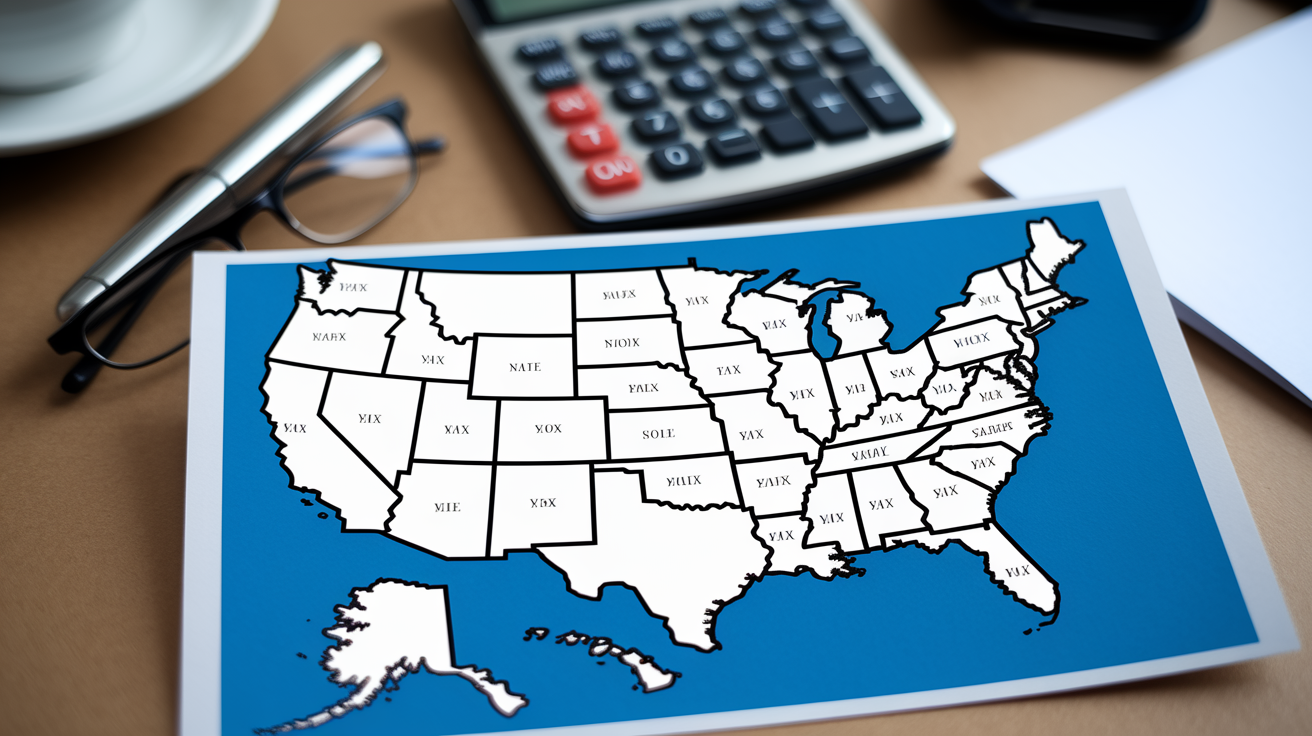
Nine states either have no personal income tax or otherwise don’t tax capital gains: Alaska, Florida, Missouri, Nevada, South Dakota, Tennessee, Texas, Washington, and Wyoming.
New Hampshire is different.
Its tax on interest and dividends was fully repealed in 2025, and Washington has a 7% capital gains excise above $250,000.
Read on for the complete list, the tradeoffs you should weigh, and a short checklist to use before you sell.
States Without a Capital Gains Tax: Full List and Key Facts

Nine states don’t impose a state capital gains tax because they don’t tax personal income at all. You’ve got Alaska, Florida, Missouri, Nevada, South Dakota, Tennessee, Texas, Washington, and Wyoming. New Hampshire is a bit different. It used to tax interest and dividends separately, but that’s gone now as of 2025.
Here’s how these states pull in revenue without touching your income:
Alaska doesn’t tax personal income or gains. The state runs on oil extraction taxes and the Alaska Permanent Fund.
Florida skips income and capital gains taxes entirely. Sales tax, tourism fees, and property taxes do the heavy lifting.
Missouri just eliminated individual capital gains taxation through House Bill 594 on July 10, 2025. The exemption goes back to January 1, 2025.
Nevada has no personal income or capital gains tax. Gaming taxes, tourism, and sales taxes cover the budget.
South Dakota doesn’t tax income or gains. Sales tax and fees keep things running.
Tennessee has no personal income or capital gains tax. It used to charge 1% to 2% on interest and dividends but killed that tax.
Texas avoids income and capital gains taxes. Property taxes, sales taxes, and business franchise taxes bring in the money.
Washington is weird. No personal income tax, but there’s a 7% capital gains excise tax on long term gains above $250,000. Only what’s over that threshold gets taxed.
Wyoming doesn’t tax income or gains. Mineral extraction, tourism, and sales taxes fund the state.
Federal capital gains tax still hits you no matter where you live. The IRS taxes long term gains at 0%, 15%, or 20% based on your taxable income. Short term gains get taxed as ordinary income, anywhere from 10% to 37%. Your state exemption doesn’t change what you owe Uncle Sam.
New Hampshire’s setup is unique. Until 2025, it only taxed interest and dividend income at a flat rate (4% in 2024, dropping to 3% in 2025 before full repeal). It never touched wages, salaries, or gains from selling assets.
Pros and Cons of Living in a No Capital Gains Tax State

Living somewhere without capital gains tax cuts your overall tax bill, especially when you sell investments, real estate, or a business. You keep more from asset sales. No need to track state rules for deductions, holding periods, or exemptions. This matters if you’re sitting on a concentrated stock position, getting equity comp, or running a taxable brokerage account with regular rebalancing. High earners with serious investment income can save big. California can charge over 14% at the state level. Moving to a zero rate state might save tens of thousands annually.
Other benefits:
No state tax return for investment income (federal still required).
Simpler record keeping since you don’t track cost basis separately for state purposes.
More flexibility timing asset sales without worrying about state brackets or surtaxes.
Potential compounding if you reinvest tax savings over multiple years.
Lower compliance risk and fewer chances of getting audited by the state on investment transactions.
But states without income tax make up the revenue somewhere else. Property taxes in Texas and New Hampshire are among the highest in the country. Sales taxes in Tennessee and Washington top 9% in many counties when you add local rates. Some states charge higher fees for vehicle registration, business licenses, or professional permits. If you own expensive real estate, drive multiple cars, or spend heavily on stuff, your total tax burden might not drop much. Cost of living can run higher in places like Seattle or Austin, eating into the tax benefit.
Downsides worth knowing:
Higher property taxes can wipe out capital gains savings, especially if you own your home outright or hold significant real estate.
Sales taxes hit most purchases and can add thousands per year depending on your spending.
Fewer state funded services (public transit, parks, universities) might mean higher out of pocket costs.
Corporate and business taxes may be higher, affecting small business owners or self employed people.
Some states charge elevated excise taxes on specific goods (fuel, tobacco, alcohol).
Estate or inheritance taxes may still apply depending on asset size and state rules.
What Capital Gains Tax Is and How It Works

Capital gains tax is what you pay on profit from selling an asset. The gain is the difference between what you paid (your cost basis) and what you got when you sold. Buy stock for $10,000, sell it for $15,000, your capital gain is $5,000. The IRS taxes that $5,000. Depending on where you live, your state might tax it too.
The federal government splits capital gains into two buckets based on how long you owned the asset. Short term gains come from assets held one year or less. These get taxed as ordinary income at your regular marginal rate (10% to 37%). Long term gains come from assets held longer than one year and get preferential treatment. You’ll pay 0%, 15%, or 20% depending on your taxable income. For 2025, single filers with taxable income below $47,025 pay 0% on long term gains. Income between $47,026 and $518,900 gets taxed at 15%. Above $518,900, it’s 20%. Married couples filing jointly have higher thresholds.
State treatment varies all over the place. Some states tax capital gains as ordinary income using the same brackets they apply to wages. Others offer partial exclusions or deductions that reduce the taxable amount. Massachusetts charges different rates for short term and long term gains. States without income tax generally don’t tax capital gains at all.
Important stuff about how capital gains work:
Only realized gains are taxed. You don’t owe tax on paper gains until you sell.
Cost basis can be adjusted for improvements (real estate), reinvested dividends (mutual funds), or stock splits.
Losses can offset gains in the same tax year. Net losses up to $3,000 can offset ordinary income annually.
Certain assets (collectibles, small business stock) have special federal rates or exclusions.
Gifts and inheritances get stepped up basis rules that can eliminate taxable gains entirely for heirs.
State Income Tax Structures and Their Impact on Capital Gains

States fund public services through income taxes, sales taxes, property taxes, and fees. The nine states without personal income tax don’t tax wages, salaries, or investment income, including capital gains. This means residents pay zero state tax on stock sales, real estate profits, or business exits. The tradeoff is heavier reliance on consumption taxes and property taxes, shifting the burden toward spending and ownership instead of earning.
New Hampshire and Washington are exceptions. New Hampshire taxed interest and dividend income at a flat rate until full repeal in 2025. It never taxed capital gains. Washington has no personal income tax but enacted a 7% capital gains excise tax in 2022 on long term gains above $250,000, with exemptions for real estate and retirement accounts. The tax affects roughly 5,000 taxpayers and survived a public vote.
How state tax structure influences capital gains treatment:
States without income tax don’t distinguish between ordinary income and investment income. They tax neither.
States with flat income tax rates (like Pennsylvania at 3.07% or Indiana at 3.0%) apply the same rate to all income, including capital gains.
States with graduated brackets (like California or New York) tax capital gains at the same marginal rate as wages, which can exceed 10% for high earners.
Some states offer partial exclusions (North Dakota excludes 40% of capital gains) or special deductions (New Mexico allows the greater of $1,000 or 40% of net gains).
A few states tax short term and long term gains differently (Massachusetts charges 8.5% on short term gains and 5% on long term gains, plus a 4% surtax on income above $1,053,750).
How to Reduce Capital Gains Tax Legally

Planning before you sell is the single most effective way to cut capital gains tax. Once the sale closes, your options narrow. The strategies below work best when applied year round, not as a December scramble.
Using Holding Periods to Lower Taxes
Holding an asset for more than one year converts a short term gain taxed at ordinary rates into a long term gain taxed at preferential rates. The difference can be 20 percentage points or more at the federal level. If you’re close to the one year mark, waiting a few extra days or weeks can produce immediate tax savings.
Check your purchase date before selling. If you’re within 30 days of the one year threshold, delay the sale.
Use a tax calendar to track holding periods for each position in your brokerage account.
For equity compensation (RSUs, stock options), confirm whether the holding period starts at vest or at exercise.
Set reminders 11 months after acquiring a position so you can evaluate whether to hold or sell closer to the one year mark.
Offsetting Gains With Losses
Tax loss harvesting lets you sell losing positions to offset gains from winning positions in the same tax year. If your losses exceed your gains, you can deduct up to $3,000 of net losses against ordinary income ($1,500 if married filing separately). Remaining losses carry forward indefinitely to future years.
Review your brokerage account in November and December to identify unrealized losses.
Sell losing positions before year end to lock in the loss. Use the proceeds to buy a similar (but not identical) asset to avoid the wash sale rule.
Don’t repurchase the same security within 30 days before or after the sale. The IRS will disallow the loss.
Carry forward unused losses to offset gains in future years, reducing your long term tax burden.
Leveraging Tax Advantaged Accounts
Gains inside retirement accounts like IRAs, 401(k)s, and Roth IRAs grow tax deferred or tax free. You don’t pay capital gains tax when you sell investments inside these accounts. In Roth accounts, qualified withdrawals are entirely tax free. Health savings accounts (HSAs) also grow tax free if used for qualified medical expenses.
Max out annual contributions to 401(k)s ($23,000 in 2025, plus $7,500 catch up if age 50+) and IRAs ($7,000 in 2025, plus $1,000 catch up).
Use Roth accounts for assets with high growth potential. All future gains will be tax free upon withdrawal after age 59½.
Consider a self directed IRA (SDIRA) if you want to hold alternative assets like real estate or private equity, but follow strict compliance rules to avoid prohibited transactions.
Use HSAs as a secondary retirement vehicle. Triple tax advantage (deductible contributions, tax free growth, tax free withdrawals for medical costs).
Comparison of Capital Gains Tax Treatment Across States

Most states tax capital gains as ordinary income using the same rate schedule they apply to wages. A few offer partial exclusions or flat rates. Nine states impose no tax at all. The table below shows treatment in states with no capital gains tax and one high rate example for contrast.
| State | Income Tax | Capital Gains Tax Treatment |
|---|---|---|
| Alaska | None | No state capital gains tax |
| Florida | None | No state capital gains tax |
| Missouri | 4.7% (flat; capital gains exempt as of 2025) | No state capital gains tax (effective January 1, 2025) |
| Nevada | None | No state capital gains tax |
| South Dakota | None | No state capital gains tax |
| Tennessee | None | No state capital gains tax |
| Texas | None | No state capital gains tax |
| Washington | None (but 7% capital gains excise tax above $250,000) | 7% on long term gains exceeding $250,000 |
| Wyoming | None | No state capital gains tax |
| California | Up to 13.3% | Taxed as ordinary income at full rate |
California’s top marginal rate of 13.3% applies to all income, including capital gains. That makes it the highest state capital gains tax in the U.S. New York and New Jersey also charge rates above 10% when including local taxes. States like North Dakota and Pennsylvania tax capital gains but at much lower effective rates due to exclusions or flat rates below 3.5%.
Some states offer targeted exclusions that cut the effective tax rate on capital gains. North Dakota excludes 40% of capital gains from taxable income, reducing the effective rate to roughly 1.5% to 2.5%. South Carolina excludes 44% of long term gains. Wisconsin allows a 30% deduction on gains (60% for farm assets). Vermont excludes up to 40% of gains held more than three years, capped at $350,000. These carve outs can make a moderate tax state more attractive than a no tax state if property and sales taxes are significantly lower.
How to Decide Whether to Relocate for Tax Reasons

Moving to a state without capital gains tax can save money, but relocation is a big decision with financial and personal tradeoffs. Tax savings alone shouldn’t drive the choice. Before you commit, model your full tax picture. Include property taxes, sales taxes, estate taxes, and cost of living. Compare it to your current situation.
Start by calculating your annual capital gains. If you rarely sell investments or real estate, the benefit of moving may be small. If you’re planning a liquidity event (selling a business, exercising stock options, selling a rental property), the timing of your move becomes critical. Establish legal residency in the new state before the sale to avoid owing tax in your old state. That typically means living in the new state for more than half the year, updating your driver’s license and voter registration, and closing financial ties to your old state.
Things to consider when evaluating a relocation for tax purposes:
Property taxes. Texas, New Hampshire, and New Jersey have some of the highest property tax rates in the U.S., often exceeding 2% of assessed value annually.
Sales taxes. Tennessee, Washington, and Nevada have combined state and local sales tax rates above 9%, which can add thousands per year depending on spending.
Estate and inheritance taxes. Some states impose taxes on estates or inheritances that can offset income tax savings. Check both your current state and your destination.
Cost of living. Housing, utilities, and everyday expenses vary widely. A lower tax bill may not translate to lower overall expenses.
Income sources. If you earn W-2 income, some states may still tax you if your employer is based there. Remote workers should verify sourcing rules.
Job market and career opportunities. Moving to a low tax state with fewer employment options can reduce lifetime earnings more than tax savings.
Quality of life. Climate, schools, healthcare access, and proximity to family and friends matter. Financial optimization shouldn’t come at the cost of well being.
Before selling a large asset after relocating, document your residency change. Keep records of your lease or home purchase, utility bills, bank statements showing in state transactions, and any correspondence with state tax authorities. Some high tax states aggressively audit former residents who move shortly before a major sale. Clear documentation protects you if questioned.
If you’re unsure whether a move makes sense, model multiple scenarios with your CPA. Compare your projected tax bill in your current state versus the new state over three to five years. Factor in all taxes and cost of living changes. Ask about timing. Should you establish residency before or after a sale? What counts as domicile in the new state? What records do you need to keep? A few hours of planning can prevent expensive mistakes and state tax disputes later.
Final Words
You now have the nine states that don’t tax capital gains and the key facts to make sense of them.
We covered pros and cons, how federal capital gains tax still applies, state income structures, tax‑reducing moves (holding periods, harvesting, tax‑advantaged accounts), a state comparison, and a relocation checklist.
Use the states with no capital gains tax list as a starting point. Gather your numbers, run scenarios with your CPA, and keep good records. Timing matters — you can reduce surprises and keep more of your gains.
FAQ
Q: What states have zero capital gains tax?
A: The states that have no state-level capital gains tax are Alaska, Florida, Nevada, South Dakota, Tennessee, Texas, Washington, Wyoming, and New Hampshire, which only taxes interest and dividends.
Q: How to avoid capital gains tax in the USA?
A: To avoid capital gains tax in the USA, use tax-savvy steps: hold assets longer for long-term rates, harvest losses to offset gains, sell inside retirement accounts, or consider state relocation — coordinate with a CPA.
Q: Which president started the IRS?
A: The IRS traces back to President Abraham Lincoln, who created the Bureau of Internal Revenue under the Revenue Act of 1862 to fund the Civil War; that bureau later evolved into today’s IRS.
Q: What is the most tax-friendly state?
A: The most tax-friendly state depends on your income and spending; often Florida or Texas rank high because they have no state income tax, but consider sales, property taxes, and cost of living.

