

What if the IRS lets you turn rental losses into a tax cut for your salary?
Real Estate Professional Status (REPS) can do exactly that, if you meet strict IRS tests.
When you qualify, rental activity is treated as non-passive so losses can offset ordinary income.
This post walks you through the two yearly tests, how to show material participation, the records the IRS wants, common deductions, and the risks to watch.
Read on to get clear, practical steps and the right questions to ask your CPA.
IRS Rules for Qualifying as a Real Estate Professional

The IRS defines a Real Estate Professional under Internal Revenue Code Section 469(c)(7). To qualify, you’ve got to clear two specific tests every single tax year. First, spend more than 750 hours working in real property trades or businesses during the year. Second, more than half of your total personal services during the year must be in those real property activities. These aren’t one-time checkboxes. You need to hit both marks every year you want to claim Real Estate Professional Status.
Meeting REPS flips rental real estate from passive to non-passive. That’s the unlock. Passive activities get stuck with passive activity loss rules that suspend rental losses until you sell the property or generate passive income. Real Estate Professionals who also materially participate in their rental activities can use rental losses to offset ordinary income like wages, bonuses, or business earnings. This is completely different from typical rental treatment, where losses pile up on paper and wait.
The mechanics are straightforward but strict. The IRS counts hours you personally spend in real property development, redevelopment, construction, reconstruction, acquisition, conversion, rental, operation, management, leasing, or brokerage. Employee hours only count if you own at least 5% of the employer. You can’t double-count time or inflate roles. Investment activities like reviewing statements or casual property inspections don’t qualify. The IRS wants regular, hands-on work.
- Work more than 750 hours per year in real property trades or businesses.
- More than 50% of your total personal services must be in real property activities.
- Material participation in each rental activity (or grouped activities) is required to use losses against ordinary income.
- Qualifying activities include property management, leasing, tenant relations, repairs oversight, and related operational tasks.
- Both tests must be satisfied annually. REPS isn’t a permanent classification.
Understanding How REPS Unlocks Tax Advantages

Real Estate Professional Status changes the tax classification of your rental activities from passive to non-passive. That reclassification removes the passive activity loss limitations found in IRC Section 469. Without REPS, rental losses get suspended and can only offset passive income or be released when you sell the property. With REPS, rental losses flow directly against your W-2 income, self-employment income, or other non-passive earnings. The result is an immediate drop in taxable income and current-year tax liability.
The tax benefits get bigger when you layer in depreciation. Residential rental property depreciates over 27.5 years using straight-line depreciation. A $275,000 building generates $10,000 in annual depreciation without any cash outlay. Add operating expenses like repairs, insurance, property taxes, and mortgage interest, and a rental property can easily produce a $30,000 to $50,000 paper loss even when cash flow is positive or neutral. For a Real Estate Professional in the 24% federal tax bracket, a $40,000 rental loss creates roughly $9,600 in immediate federal tax savings.
Bonus depreciation and cost segregation studies can accelerate those deductions even further. Cost segregation reclassifies portions of a building into shorter-lived personal property, moving depreciation from a 27.5-year schedule into 5-, 7-, or 15-year buckets. Real Estate Professionals can use those front-loaded deductions to offset active income in the same year, improving cash flow and reinvestment capacity.
Material Participation Tests and How They Apply

Qualifying as a Real Estate Professional is only half the equation. You also need to materially participate in each rental activity, or in a grouped set of rental activities, to treat those rentals as non-passive. The IRS provides seven material participation tests in Treasury Regulation 1.469-5T(a). Satisfying any one of the seven tests is enough.
- You participate more than 500 hours during the tax year in the activity.
- Your participation makes up substantially all of the participation in the activity by all individuals, including non-owners.
- You participate more than 100 hours during the tax year, and you participate more than any other individual (including employees and contractors).
- The activity is a significant participation activity, and you participated in all significant participation activities for more than 500 hours in total.
- You materially participated in the activity for any five of the prior ten tax years.
- The activity is a personal service activity, and you materially participated for any three prior tax years.
The facts-and-circumstances test exists but is rarely relied upon because it’s subjective and tough to defend. Most Real Estate Professionals lean on the 500-hour test or the 100-hour-plus-more-than-anyone-else test. For example, if you spend 520 hours managing three rental properties and no other individual (employee, contractor, or co-owner) spends more time than you, you materially participate under Test 1. If you spend 150 hours and your property manager spends 140 hours, you satisfy Test 3. Grouping multiple rental properties into a single activity under Treasury Regulation 1.469-9(g) allows you to aggregate hours across all properties, making it easier to meet the 500-hour threshold on a combined basis.
Documentation Requirements to Defend REPS Status

The IRS and Tax Court place the burden of proof squarely on the taxpayer. Claiming REPS without contemporaneous records invites disallowance. A reconstructed log created during an audit is weak evidence. Courts routinely reject time logs that show rounded hours, identical weekly totals, or implausibly uniform entries. The gold standard is a real-time record kept as you perform the work.
Your documentation should include a day-by-day log showing the date, hours worked, specific tasks performed, and which property or project the work relates to. Corroborating evidence strengthens the log. Calendar entries, emails to tenants or vendors, signed contracts, invoices, work orders, receipts, and photos all help. If you traveled to a property, log the date, mileage, and purpose. If you supervised a contractor, keep the email thread or text exchange confirming the appointment.
- Maintain a contemporaneous time log with date, hours, task description, and property identifier.
- Retain corroborating materials such as emails, calendar appointments, invoices, and receipts.
- Track mileage for property visits with date, starting location, destination, miles driven, and business purpose.
- Avoid vague entries like “property management” or “general oversight.” Specify actions like “met plumber to assess water heater replacement” or “showed unit to prospective tenant.”
Deductible Expenses for Real Estate Professionals

Real Estate Professionals can deduct the same expenses as any rental property owner, but the difference is timing and impact. Because REPS allows rental losses to offset ordinary income, every deductible dollar reduces your current tax bill rather than being suspended. Depreciation is the largest non-cash deduction. A $200,000 residential rental building depreciates at $7,273 per year ($200,000 ÷ 27.5 years). Commercial property depreciates over 39 years.
Operating expenses add up quickly. Mortgage interest, property taxes, insurance, repairs, maintenance, utilities, advertising, legal fees, accounting fees, property management fees, and travel costs are all deductible. Repairs are immediately deductible. Capital improvements must be depreciated. For example, replacing a broken window is a repair. Replacing all windows with energy-efficient models is an improvement and gets depreciated over the building’s life. Travel to inspect properties, meet contractors, or show units is deductible if you document mileage and purpose.
Cost segregation studies can reclassify components of a building into shorter depreciation lives. Bonus depreciation, though phasing down under the Tax Cuts and Jobs Act, allows immediate expensing of a percentage of eligible property. In 2024, bonus depreciation is 60%. It drops to 40% in 2025. A Real Estate Professional who places $100,000 of qualifying property in service in 2024 can deduct $60,000 immediately rather than spreading it over decades.
| Expense Category | Typical Deductible Items |
|---|---|
| Depreciation & Amortization | Building depreciation (27.5 or 39 years), cost segregation reclassifications, bonus depreciation on qualifying improvements |
| Operating Expenses | Property taxes, insurance, utilities, repairs, maintenance, advertising, legal/accounting fees, property management fees |
| Financing & Travel | Mortgage interest, loan origination fees (amortized), travel mileage (67¢/mile in 2024), lodging for out-of-town properties |
REPS vs Passive Investors: Key Differences
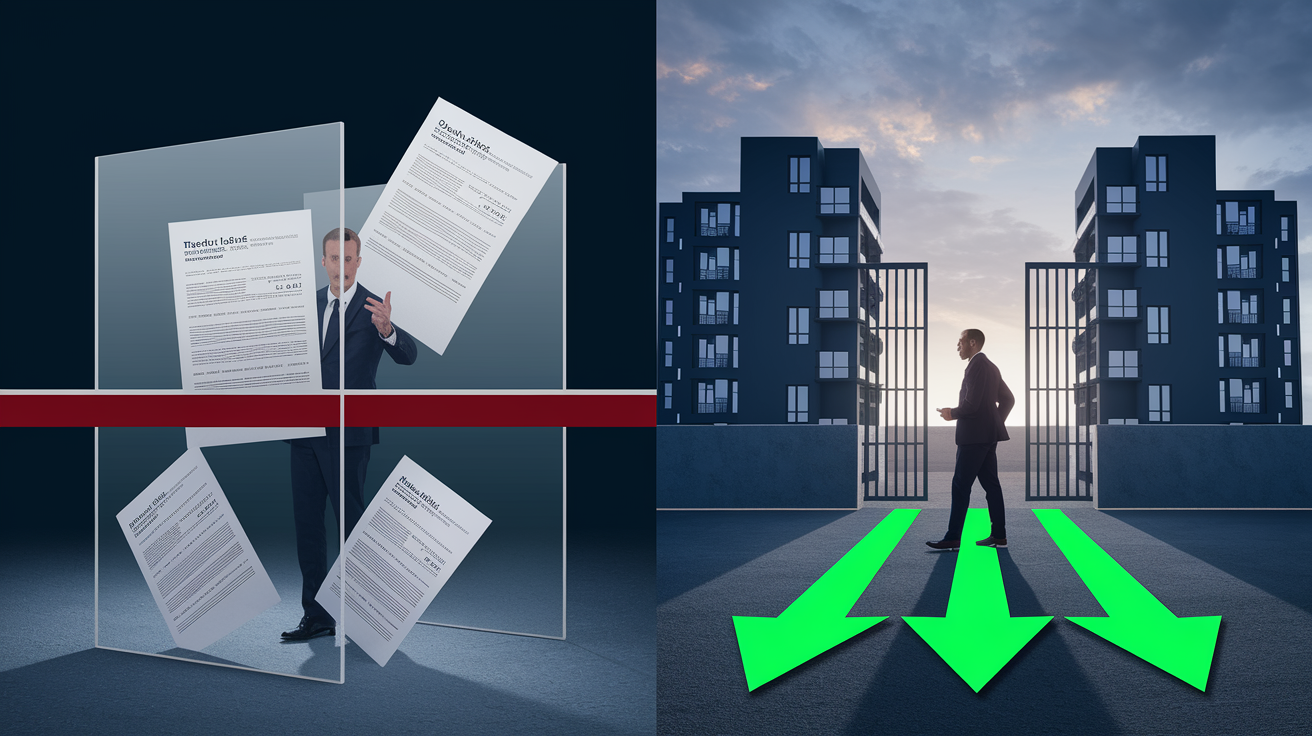
A passive real estate investor faces strict loss limitations. Rental real estate is automatically classified as a passive activity unless the taxpayer qualifies as a Real Estate Professional or meets the active participation exception. Active participation allows up to $25,000 in rental losses to offset ordinary income, but that allowance phases out for modified adjusted gross income between $100,000 and $150,000. Once MAGI hits $150,000, the allowance disappears entirely. Losses above the cap, or any losses for taxpayers over the phaseout threshold, are suspended and carried forward until the property is sold or passive income is generated.
Real Estate Professionals bypass all of that. REPS removes the passive classification entirely for rental activities where material participation is met. There’s no $25,000 cap, no income phaseout, and no suspension. A REPS taxpayer with $200,000 of W-2 income and $60,000 in rental losses can offset the full $60,000 against wages, reducing taxable income to $140,000. A passive investor at the same income level would suspend the entire $60,000 loss.
- Passive investors are subject to passive activity loss rules. Losses are suspended unless passive income exists or the property is sold.
- The $25,000 active participation allowance phases out between $100,000 and $150,000 MAGI and disappears completely at $150,000.
- Real Estate Professionals with material participation can deduct unlimited rental losses against ordinary income with no income phaseout.
- REPS also avoids the 3.8% Net Investment Income Tax on rental income in many cases, because materially participated rental activities aren’t treated as investment income.
Example Scenarios Showing REPS Tax Savings

Scenario 1: A married couple files jointly. One spouse works full-time as a property manager for their own rental portfolio, logging 950 hours in the tax year. Their W-2 income from other sources is $180,000. Their rental properties generate $55,000 in losses after depreciation, mortgage interest, repairs, and operating expenses. Because the spouse qualifies as a Real Estate Professional and materially participates in the rentals, the $55,000 loss offsets the couple’s $180,000 in wages. Taxable income drops to $125,000. At a 24% marginal federal tax rate, the immediate federal tax savings is approximately $13,200 ($55,000 × 24%). If the couple were passive investors, the entire $55,000 loss would be suspended due to the MAGI phaseout threshold, resulting in zero current-year benefit.
Scenario 2: A self-employed consultant earns $220,000 in business income. She also owns four single-family rentals that produce a combined $42,000 in losses, driven primarily by $38,000 in depreciation from a recent cost segregation study. She spends 820 hours managing the properties and elects to group them as a single activity. She qualifies as a Real Estate Professional and materially participates under the 500-hour test. The $42,000 rental loss offsets her $220,000 consulting income, reducing taxable income to $178,000. At a 32% marginal federal rate, she saves roughly $13,440 in federal tax ($42,000 × 32%). Without REPS, the loss would be suspended indefinitely.
| Scenario | Income | Rental Losses | Tax Savings (Estimated Federal) |
|---|---|---|---|
| Couple with W-2 income and qualifying REPS spouse | $180,000 | $55,000 | ~$13,200 (24% rate) |
| Self-employed consultant qualifying as REPS | $220,000 | $42,000 | ~$13,440 (32% rate) |
Final Words
Start by checking the 750-hour and more‑than‑half rules, then confirm material participation for each rental activity. Track hours with contemporaneous logs and gather receipts for depreciation and operating expenses.
If you meet REPS, rental losses can offset ordinary income—bonus depreciation and operating costs often create deductible paper losses. Compare the rules to passive investors and use the examples to estimate savings.
Plan your records, run the numbers, and talk to a CPA. These real estate professional tax benefits are achievable with steady record‑keeping and a bit of planning.
FAQ
Q: What are the benefits of being a real estate professional for tax purposes?
A: The benefits of being a real estate professional for tax purposes include treating rental losses as non‑passive, letting you offset ordinary income with depreciation and operating losses—if you meet IRS hours and participation tests.
Q: What can you write off as a real estate professional?
A: As a real estate professional, you can write off depreciation, mortgage interest, repairs and maintenance, insurance, property taxes, professional fees, travel and property‑management costs—expenses that often create deductible losses against ordinary income.
Q: What is the IRS rule for real estate professionals?
A: The IRS rule for real estate professionals is you must spend over 750 hours in real property trades or businesses and more than half of your total working time on real estate, plus meet material participation tests.
Q: How to save on taxes as a real estate professional?
A: To save on taxes as a real estate professional, qualify for REPS by tracking hours and participation, claim depreciation or cost segregation, deduct operating costs, document everything, and review complex choices with your CPA.

