

What if the IRS can take back years of depreciation and hit you with a tax rate nearly double your capital gains rate?
That’s depreciation recapture — up to 25% on residential rentals — and it can turn a profitable sale into a big surprise.
Before you sell, five key factors decide how much you’ll owe and five clear strategies can cut or defer that bill.
This post walks you through those drivers and gives step-by-step options — 1031 exchanges, installment sales, charitable remainder trusts (CRTs), Opportunity Zone moves, and timing or cost segregation tweaks — so you can plan, not panic.
Understanding Depreciation Recapture and Your Options to Reduce It
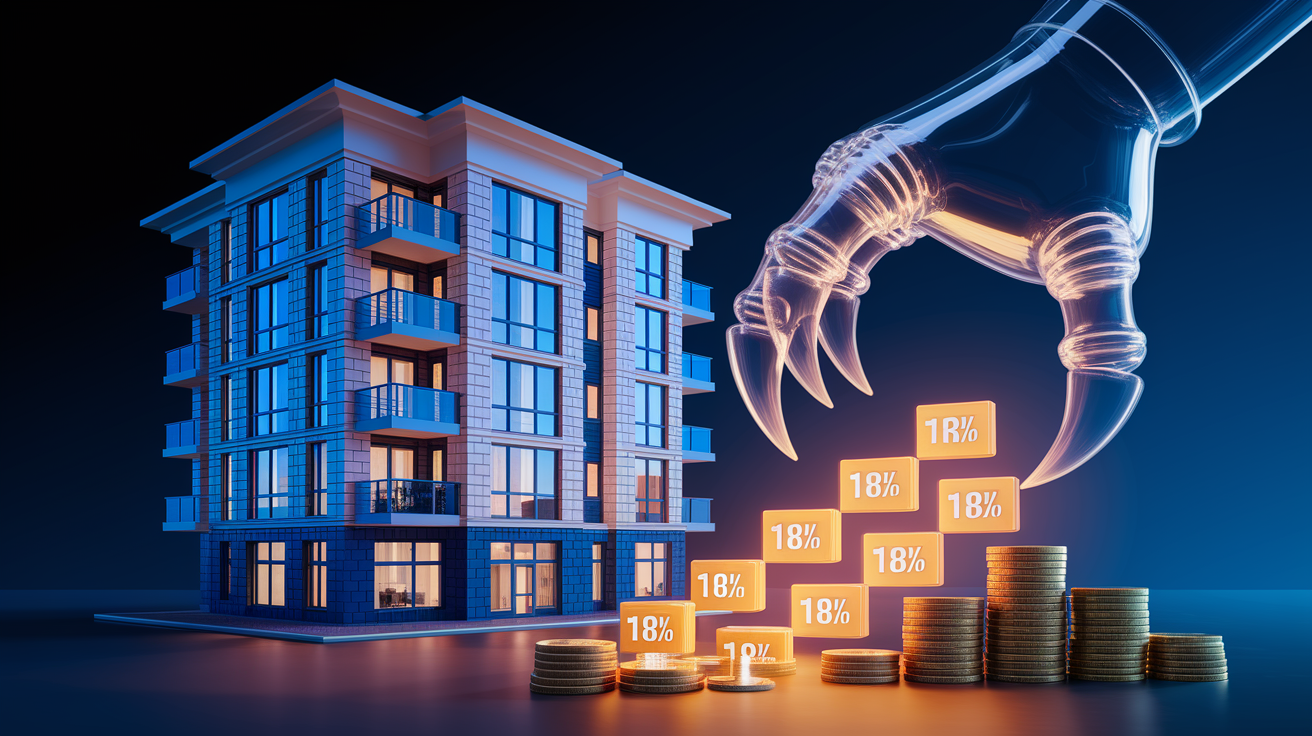
Depreciation recapture is how the IRS claws back the tax breaks you took while owning rental property. When you sell, the IRS reclassifies the depreciation you claimed and taxes it at a higher rate than your regular long-term capital gains. For residential rentals (what the IRS calls Section 1250 property), you’re looking at up to 25%. That’s nearly double the typical 15% long-term rate, even if you held the place for twenty years.
Here’s what happens. Every year you own a rental, you deduct around 3.6% of the depreciable basis (purchase price minus land value) over 27.5 years. Those deductions chip away at your adjusted basis. Sell the property, and your taxable gain equals sale price minus adjusted basis. Lower basis means bigger gain, and the IRS recaptures that depreciation at up to 25%. Didn’t claim depreciation? Doesn’t matter. The IRS taxes you on what you should have taken.
Before you sell, know the five things that determine how much you’ll owe and the five main ways to cut or defer it.
Five Key Depreciation Recapture Drivers:
- Total accumulated depreciation claimed (or allowable) during ownership
- Sale price compared to your adjusted basis
- Your marginal federal tax bracket (which can push capital gains past 15%)
- Whether you used cost segregation on components taxed at ordinary income rates
- How your state treats capital gains and recaptured depreciation
Five Core Strategies to Reduce or Defer Recapture Tax:
- 1031 exchange – defer both capital gains and recapture by rolling sale proceeds into replacement property
- Installment sale – spread capital gains across multiple years to lower your marginal exposure (though recapture still hits in year one)
- Charitable remainder trust (CRT) – transfer property to a trust that sells tax-free and pays you income over time
- Opportunity Zone reinvestment – defer capital gains (not recapture directly) by putting proceeds into qualified funds
- Timing and cost segregation planning – stick with straight-line depreciation or delay accelerated methods to reduce future recapture
Key IRS Mechanics Behind Depreciation Recapture

Depreciation lowers your adjusted basis every year. That increases your taxable gain when you sell. The formula’s simple: adjusted basis equals original purchase price (minus land), plus capital improvements, minus accumulated depreciation. Buy a property for $400,000 (with $300,000 allocated to the building), claim $109,090 of depreciation over 10 years, then sell for $600,000? Your adjusted basis drops to $190,910. Total gain becomes $409,090, and $109,090 of that gets hit with unrecaptured Section 1250 gain at up to 25%.
The IRS won’t let you skip recapture by not claiming depreciation. If you could have taken it under IRS rules, you owe recapture tax on the allowable amount. Even if you never filed the deduction. This stops people from gaming the system by skipping depreciation to dodge recapture later. Unrecaptured Section 1250 gain only applies to straight-line depreciation on real property. Use cost segregation to speed up deductions on tangible personal property (fixtures, carpets, appliances)? Those components may get recaptured at ordinary income rates under Section 1245 rules.
How Asset Classes Affect Recapture Treatment:
- Section 1250 property (building structure) – taxed at up to 25% on depreciation recapture; long-term capital gains on appreciation above original basis taxed at 15% or 20%
- Section 1245 property (cost-segregated components) – recaptured at ordinary income rates (up to 37% federally) to the extent of gain
- Land improvements (parking, landscaping) – typically 15-year property; recapture at ordinary rates if you used accelerated methods
Using a 1031 Exchange to Defer Depreciation Recapture Taxes

A 1031 exchange lets you defer both capital gains and depreciation recapture by selling your investment property and rolling the entire net proceeds into like-kind replacement property. The IRS doesn’t recognize a taxable sale as long as you follow strict timing and reinvestment rules. You’ve got 45 days from closing to identify potential replacement properties and 180 days to complete the purchase of at least one. All proceeds flow through a qualified intermediary. Touch the money between transactions and the exchange is toast.
The deferral isn’t permanent elimination. Your recapture liability rolls into the new property’s basis, reducing your adjusted basis and increasing future recapture when you sell without another exchange. Plenty of investors chain 1031 exchanges across multiple properties for years. They defer taxes until death. At that point, heirs get a stepped-up basis, which erases the deferred capital gains and recapture for estate purposes (subject to estate tax rules). But that only works if you plan your estate correctly and don’t trigger a taxable event before you die.
Not all exchanges are simple swaps. You can use different structures depending on timing and what’s available.
| Type | Key Benefit |
|---|---|
| Standard forward exchange | Sell first, buy replacement within 180 days |
| Reverse exchange | Buy replacement first, sell relinquished property within 180 days |
| Improvement (build-to-suit) exchange | Use exchange proceeds to fund improvements on replacement property before close |
| Delaware Statutory Trust (DST) | Fractional ownership in professionally managed property; passive, small capital minimums |
| Tenancy-in-common (TIC) | Co-ownership structure; more control than DST but requires active management |
| Partial exchange | Defer tax on reinvested proceeds; pay tax on cash or debt relief (“boot”) in the year of sale |
Four Common 1031 Mistakes That Trigger Unexpected Recapture:
- Boot (cash or debt relief not reinvested) – any proceeds you keep or mortgage debt you don’t replace with equal or greater debt on the replacement property is taxable in the year of sale
- Missed deadlines – blow the day 45 or day 180 deadline and the entire exchange gets disqualified
- Disqualified property – primary residences, property held for sale (inventory), and certain partnership interests don’t qualify
- Wrong entity or title mismatch – the same taxpayer (or entity) that sold the relinquished property must acquire the replacement property
How the Installment Sale Method Reduces Depreciation Recapture Exposure

An installment sale spreads your capital gain recognition across multiple years by receiving sale proceeds in installments instead of a lump sum at closing. This works when you provide seller financing to the buyer, who pays you principal and interest over an agreed schedule. Often 5, 10, or 15 years. Each year, you recognize a slice of the capital gain based on the payment received. That can keep you in a lower marginal tax bracket and reduce the effective rate on long-term capital gains from 15% to something lower if your total taxable income stays below the 20% threshold.
Depreciation recapture doesn’t get the same benefit. The IRS makes you recognize the entire unrecaptured Section 1250 gain (the recapture portion) in the year of sale, even if you receive payments over time. Only the capital gain above your original basis gets deferred. The installment method works best when your recapture amount is small compared to total gain, or when spreading the capital gain portion keeps you out of higher tax brackets, the 3.8% net investment income tax, or state surcharges. You’ve got to charge interest on the deferred payments at or above the IRS applicable federal rate (AFR), or the IRS will impute interest income and tax you on money you never actually received.
Installment Sale Pros and Cons:
- Pro: spreads capital gains over multiple years, reducing marginal tax exposure and smoothing income spikes
- Pro: generates ongoing interest income at rates often higher than Treasury yields
- Con: depreciation recapture is fully taxable in year one, no deferral on that piece
- Con: buyer default risk. If the buyer stops paying, you face foreclosure, legal costs, and phantom income from previously recognized gain
Timing Cost Segregation and Depreciation Choices to Manage Recapture
Cost segregation is an engineering-based tax strategy that reclassifies building components into shorter-lived asset categories, speeding up depreciation in the first few years of ownership. Instead of depreciating the entire building over 27.5 years, a cost segregation study might classify carpets, appliances, and certain fixtures as 5-year or 7-year property. Site improvements like parking lots become 15-year property. Combined with bonus depreciation (100% first-year expensing through 2022, now phasing down), cost segregation can generate massive upfront deductions that offset active or passive income.
The tax benefit comes with a recapture cost. Components depreciated under shorter schedules often get treated as Section 1245 property. That means recapture is taxed at ordinary income rates (up to 37% federally) instead of the 25% unrecaptured Section 1250 rate that applies to real property. Hold the property for 5 to 10 years, and you may recapture most of that accelerated depreciation at higher rates. That can wipe out much of the original benefit. The strategy works better for long-term holds (15+ years), where you harvest the upfront deduction during high-income years and defer the sale until retirement or a lower-income period. Or pair it with a 1031 exchange to defer recapture entirely.
Bonus depreciation rules changed after 2022. The 100% first-year expensing benefit is phasing down: 80% in 2023, 60% in 2024, 40% in 2025, 20% in 2026, and zero after that unless Congress extends it. Run a cost segregation study in 2025 or later? The upfront benefit shrinks while the recapture exposure stays the same. For investors in low or no state income tax states like Florida, the value of federal-only depreciation deductions is smaller. Over-acceleration becomes harder to justify unless paired with a controlled exit plan.
| Asset Type | Depreciation Method | Recapture Rate Exposure |
|---|---|---|
| Building structure (Section 1250) | 27.5-year straight-line | Up to 25% unrecaptured Section 1250 gain |
| Carpets, appliances (Section 1245) | 5-year accelerated (cost segregation) | Ordinary income rates (up to 37%) |
| Land improvements (parking, landscaping) | 15-year accelerated | Ordinary income rates to extent of gain |
| Tangible personal property (furniture, fixtures) | 5- or 7-year accelerated | Ordinary income rates (up to 37%) |
Converting an Investment Property to a Primary Residence

Section 121 of the tax code lets you exclude up to $250,000 of capital gains ($500,000 if married filing jointly) when you sell your primary residence, as long as you lived in the home for at least 2 of the 5 years before the sale. The 2 years don’t have to be consecutive. You can move in and out as long as total occupancy adds up to 24 months within the 5-year lookback period. This exclusion can permanently wipe out a big chunk of your taxable gain. But it doesn’t eliminate depreciation recapture. Any depreciation you claimed after May 6, 1997 still gets hit with the 25% unrecaptured Section 1250 gain tax, even if the rest of your gain qualifies for exclusion.
The strategy works for investors who convert a rental property into their primary residence before selling. Buy a rental for $300,000, claim $50,000 of depreciation over 10 years, then move in and live there for 2 years before selling for $600,000? Your total gain would be $350,000 ($600,000 sale price minus $250,000 adjusted basis). You could exclude up to $250,000 of that gain under Section 121, leaving $100,000 taxable. Of the taxable amount, $50,000 is depreciation recapture (taxed at 25%) and the remaining $50,000 is long-term capital gain (taxed at 15% or 20% depending on income). The result is a much smaller tax bill than selling the property as a pure rental.
Five Documents You Need to Prove Primary Residence Occupancy:
- Utility bills in your name showing continuous service at the property address
- Voter registration and driver’s license updates reflecting the new address
- Tax filings (federal and state) listing the property as your primary residence
- Homestead exemption records (if applicable in your state)
- Lease termination or vacancy records showing the property wasn’t rented during your occupancy period
Reducing Recapture Through Opportunity Zone Reinvestment

Opportunity Zones (OZ) are designated low-income census tracts where investors can defer and potentially eliminate capital gains tax by reinvesting sale proceeds into a Qualified Opportunity Fund (QOF) within 180 days of the sale. The OZ program doesn’t directly reduce depreciation recapture. You still owe the 25% unrecaptured Section 1250 gain tax in the year you sell your rental property. What it does offer is deferral of the capital gains portion of your sale until December 31, 2026 (or earlier if you sell the QOF investment), plus permanent exclusion of post-investment appreciation if you hold the QOF investment for at least 10 years.
Here’s how it works. Sell your rental property, recognize and pay tax on depreciation recapture immediately, then roll the capital gain portion into a QOF within 180 days. Your capital gains tax gets deferred until 2026 or the date you exit the QOF, whichever comes first. Hold the QOF investment for 10 years, and any appreciation in the fund is tax-free when you sell. This can make sense if your rental property has large capital gains relative to depreciation recapture, and you’re willing to reinvest in a QOF for a decade. It doesn’t help investors with heavy recapture exposure unless paired with another approach.
Three Key OZ Limitations and Timing Constraints:
- Recapture is not deferrable – only capital gains qualify for deferral; depreciation recapture must be paid in the year of sale
- 180-day reinvestment deadline – proceeds must be invested in a QOF within 180 days of the sale or you lose the deferral
- Liquidity and control trade-offs – QOF investments are typically illiquid, long-term holds with limited investor control; funds invest in designated zones, not properties of your choosing
Using Charitable Remainder Trusts (CRT) to Offset Depreciation Recapture

A charitable remainder trust is an irrevocable trust that lets you transfer appreciated property to the trust, which then sells the asset without immediate tax, reinvests the proceeds, and pays you (or another beneficiary) an income stream for life or a fixed term. At the end of the trust term, what’s left goes to a qualified charity. Because the trust is tax-exempt, it doesn’t pay capital gains tax or depreciation recapture tax when it sells your rental property. Instead, the tax gets spread over time and blended into the income payments you receive, based on IRS four-tier ordering rules (ordinary income first, then capital gains, then tax-free return of principal, then tax-exempt income).
Depreciation recapture doesn’t disappear. It gets reclassified as ordinary income within the trust and distributed to you over the payout period. The benefit is tax smoothing. Instead of paying 25% recapture tax and 15-20% capital gains tax in a single year, you receive income over 10, 20, or more years, potentially at lower marginal rates if your other income drops in retirement. You also get an immediate charitable deduction based on the present value of the remainder interest that will eventually go to charity. CRTs work best for high-net-worth individuals who want income, have charitable intent, and need to avoid large one-time tax hits that would push them into higher brackets or trigger net investment income tax.
Four Situations Where a CRT Makes Sense:
- You’ve got a low-basis rental property with heavy depreciation recapture and large capital gains
- You want lifetime income but don’t need a lump sum of cash at sale
- You have charitable goals and want a current-year tax deduction to offset other income
- You’re in or near retirement and want to smooth taxable income over multiple years to stay in lower tax brackets
Preventing Future Depreciation Recapture Surprises

Depreciation recapture becomes a problem when investors don’t plan for it before selling. The tax is predictable. You know your accumulated depreciation, your adjusted basis, and the rough sale price months in advance. But plenty of owners don’t model the tax impact until they’re handed a closing statement. By then, your options are limited. The best recapture strategy is year-round tracking and proactive exit modeling, not last-minute scrambling.
Start by keeping clean records of every capital improvement, depreciation schedule adjustment, and cost segregation study. Your adjusted basis is the foundation of your recapture calculation. Errors in basis tracking can cost you thousands in overpaid taxes or IRS penalties. Run exit scenarios 12 to 18 months before a planned sale. Model recapture under a taxable sale, a 1031 exchange, an installment sale, and conversion to primary residence. Compare the after-tax proceeds in each scenario, then pick the path that preserves the most capital and aligns with your liquidity and reinvestment goals. Own property in a partnership or LLC? Coordinate depreciation and exit timing with co-owners to avoid one partner triggering recapture while another is caught off guard.
Five Year-Round Practices to Avoid Recapture Surprises:
- Track depreciation schedules and basis adjustments in real time – use accounting software or a CPA to update your adjusted basis after every improvement, casualty loss, or cost segregation study
- Model exit scenarios annually – run tax projections for taxable sale, 1031 exchange, installment sale, and primary residence conversion; update assumptions as property value and market conditions change
- Coordinate with co-owners and entity structure – if you own property in a partnership or LLC, align on depreciation methods, exit timing, and who bears recapture exposure before disputes arise
- Review cost segregation decisions before short or mid-term sales – if you accelerated depreciation and plan to sell within 5 to 10 years, model whether the upfront benefit justifies the higher recapture tax
- Plan year-end moves – selling in the current tax year? Consider loss harvesting, deferral strategies, or timing the close to align with lower-income years
When to Get Professional Guidance for Depreciation Recapture Planning

Depreciation recapture planning is technical, high-stakes, and unforgiving. Small errors in timing, documentation, or entity structure can disqualify tax-deferral strategies or trigger unexpected ordinary income treatment. A qualified CPA or tax attorney can verify your eligibility for Section 121 exclusions, confirm that your 1031 exchange meets IRS deadlines and like-kind rules, model multi-year tax outcomes under different scenarios, and help you avoid recapture mistakes that cost tens of thousands.
Four Situations That Require Professional Tax Review:
- Large capital gains or recapture exposure above $100,000 – the tax impact is material enough to justify paying for expert modeling and strategy design
- Multi-owner entities (partnerships, LLCs, tenancy-in-common) – recapture allocation, basis tracking, and exit coordination are complex and high-risk without professional help
- Cost segregation or bonus depreciation on property held fewer than 10 years – recapture at ordinary income rates can erase the benefit; a CPA should model the trade-off before you sell
- Complex exchanges (reverse, improvement, DST, partial exchange) – IRS rules are strict, and missed steps disqualify the entire deferral; use a qualified intermediary and tax advisor to ensure compliance
Final Words
We walked through what depreciation recapture is, how the IRS treats accumulated depreciation and adjusted basis, and why the 25% recapture rate matters.
We also covered practical tools—1031 exchanges, installment sales, CRTs, Opportunity Zones, cost segregation timing, and converting a rental to a primary residence.
Use the checklist: records, exit modeling, and CPA questions before you sell. With a plan and one or two tax strategies to minimize depreciation recapture on property sale, you’ll cut surprises and keep more of your proceeds.
FAQ
Q: How to avoid taxes on depreciation recapture?
A: To avoid taxes on depreciation recapture, use legal deferral or conversion strategies like a 1031 like‑kind exchange, installment sale, charitable remainder trust, Opportunity Zone reinvestment, or timing moves.
Q: Is depreciation recapture always taxed at 25%?
A: Depreciation recapture is not always taxed at 25%. Unrecaptured Section 1250 gain is taxed up to 25%, while Section 1245 items can be recaptured as ordinary income at higher rates.
Q: How to offset depreciation recapture?
A: You can offset depreciation recapture with capital losses for capital‑gain portions, but the recapture taxed at 25% often isn’t ordinary income. Prefer deferral tools, such as 1031 exchanges, CRTs, or installment sales.
Q: Does depreciation recapture ever go away?
A: Depreciation recapture can go away in limited cases: a step‑up in basis at death eliminates it. Otherwise it’s usually deferred (for example via 1031 exchanges) or managed, not permanently erased.

