

What if you could legally exclude up to 100% of a stock sale’s gain—yet lose it all with one paperwork mistake?
Section 1202’s QSBS rules let you shelter huge gains, but only if your stock passes strict tests on original issuance, C-corp status, asset caps, active business use, holding period, and redemptions.
This checklist walks you through every eligibility check, the exact documents to pull, and the timing traps to avoid.
Run it at least six months before a planned sale so you can model outcomes and ask your CPA the right questions.
Core QSBS Sale Requirements and Eligibility Verification Checklist

Section 1202 can exclude up to 100% of your gain on qualified small business stock. But only if the stock clears four mandatory tests. Before you plan the sale, run through this eligibility checklist. Every box has to tick before you start modeling the exclusion.
-
Original issuance from the corporation. You (or your partnership, treated as an individual) must acquire the stock directly from the issuing C corporation. Secondary purchases don’t qualify. If you transfer previously issued QSBS into a partnership after the fact, you’ve destroyed the stock’s eligibility under Treas. Reg. §1.1045-1(i) Example 12.
-
C corporation status at issuance. The issuing entity must be a C corporation when the stock is issued. S-corp stock never qualifies while the S election is in effect, even if the company later converts.
-
Aggregate gross assets test. Immediately after the stock is issued, the corporation’s aggregate gross assets can’t exceed $50,000,000. “Aggregate gross assets” means cash plus the adjusted basis of all other property. For property contributed at issuance, use fair market value as the adjusted tax basis under Section 1202(d)(2)(B). If your company raised a $40 million Series A on a $50 million pre-money valuation, but the adjusted asset basis was only $3 million, the gross assets test passes. The measure is basis, not equity valuation.
-
Active business requirement during substantially all of the holding period. The corporation must use at least 80% of its assets in an active trade or business during substantially all of your holding period. Passive holding companies, personal service firms (law, accounting, health, finance, brokerage), and businesses in hospitality or farming sectors generally fail this test.
-
Holding period exceeds five years. You must hold the stock for more than five years before sale. Track the exact issuance date to the day. “More than five years” means five years plus one day from the date the stock certificate or electronic ledger entry was recorded.
-
No redemption taint under Section 1202(c)(3). If the corporation redeemed any stock from you or a related person within a four-year window around your issuance, or if “significant redemptions” occurred within a two-year window, the stock may fail the original issuance rule.
-
No partnership transfer after issuance. Transferring stock into a partnership after you acquired it taints the partnership’s status as original holder. Plan your entity structure at issuance, not after.
-
No parent-subsidiary aggregation over $50M. If your corporation is part of a controlled group (parent owns more than 50% of a subsidiary), aggregate all group assets when applying the $50M test. A standalone company with $30 million of assets may fail the test if its parent company holds another $30 million.
If any item on the list fails, Section 1202 exclusion is disallowed for that stock issuance. Run this checklist at least six months before you plan to sell so you can fix documentation gaps or adjust transaction structure. If the five-year holding period hasn’t run yet, calculate the earliest sale date and calendar it. If the asset test failed at issuance, no planning can cure it after the fact.
QSBS Documentation To Assemble Before Initiating a Section 1202 Sale Plan
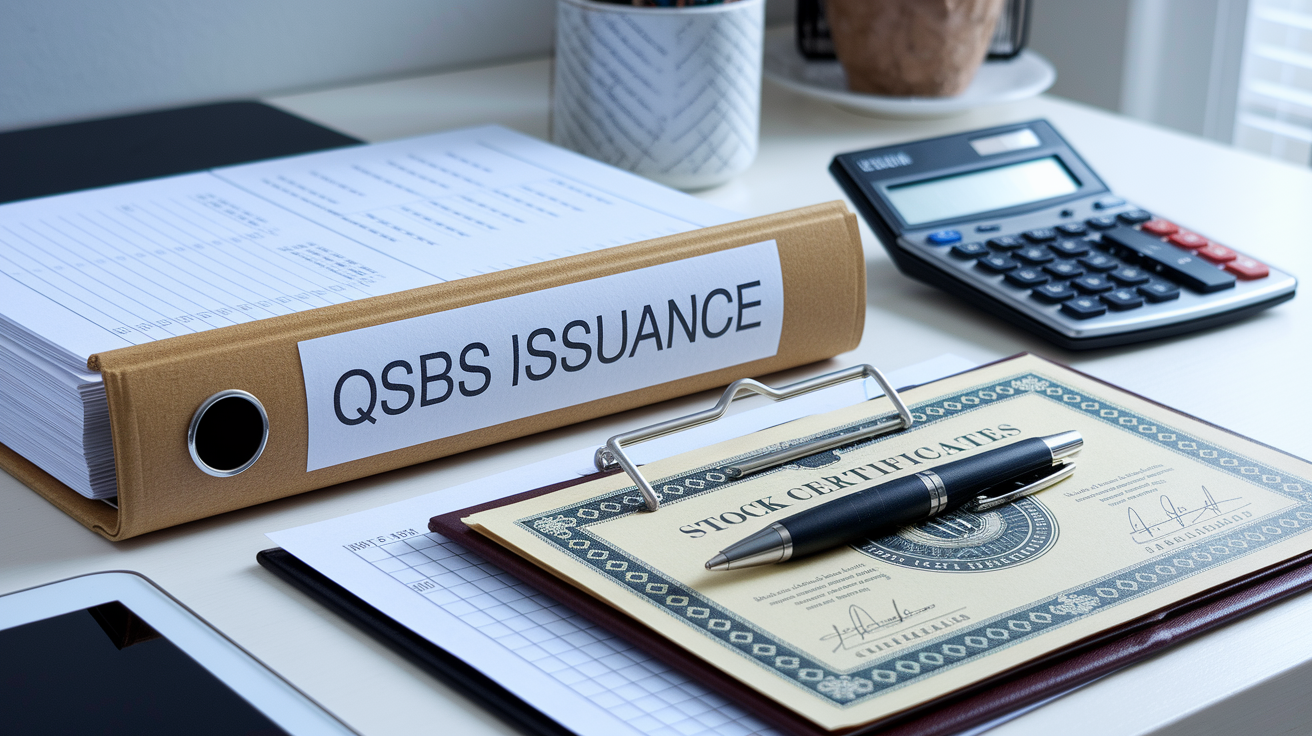
Gather your paper trail before you talk to a buyer or your CPA. The IRS enforces strict documentation requirements for QSBS exclusions. Missing records are a common audit trigger. Start with proof of original issuance and work through the active business requirement.
Pull the following records and organize them by category:
Stock purchase or subscription agreement signed at the time of issuance, showing the date, purchase price, number of shares, and parties. Canceled check, wire confirmation, or escrow settlement statement proving payment and confirming the transaction date. Stock certificate or electronic cap-table entry showing the issuance date, certificate number, and registered shareholder name. Corporate minute book or board resolutions authorizing the stock issuance, including any approvals under state law or shareholder agreements. Cap table or shareholder ledger as of the issuance date and immediately after, including all prior issuances and redemptions. Corporate articles of incorporation, amendments, and any S-election or C-election filings (IRS Forms 2553 and 8832) to confirm entity classification.
Financial statements or fixed-asset schedules showing aggregate adjusted basis of all corporate assets at the time of stock issuance. Tax returns (Form 1120) for the tax year of issuance and all subsequent years through sale, evidencing business activity and asset levels. Any valuation reports (409A or independent appraisals) prepared around the issuance date, especially if property was contributed at fair market value. Closing statements, securities purchase agreements, and capitalization schedules from all financing rounds to verify that no funding step pushed aggregate assets over $50 million when collapsed under step-transaction analysis.
Store these documents in one folder labeled with the corporation name, your name, and “QSBS – Issuance [date].” If you acquired stock in multiple rounds, create separate folders for each acquisition. Your tax advisor will cross-check dates, basis calculations, and corporate status for every issuance before signing off on the exclusion.
QSBS Exclusion Limits and Gain Calculation Under Section 1202

Section 1202 caps the excluded gain per taxpayer, per issuing corporation. The exclusion equals the greater of two amounts: $10,000,000 (reduced by any prior QSBS gains you excluded for stock from that same corporation), or ten times your aggregate adjusted basis in the QSBS sold during the taxable year. Low-basis stock gets a fixed $10 million ceiling. High-basis stock can unlock much larger exclusions.
Walk through the math for your situation. If you’re a founder who received stock for $0 cash and minimal contributed property, your basis is near zero. Ten times zero is zero, so you use the $10 million cap. If you bought $5 million of stock in a later round, your basis is at least $5 million. Ten times $5 million is $50 million, which exceeds the fixed $10 million cap, so your exclusion ceiling becomes $50 million. This structure rewards investors who put capital at risk.
| Adjusted Basis in QSBS Sold | Exclusion Potential (Greater of $10M or 10× Basis) |
|---|---|
| $0 | $10,000,000 |
| $1,000,000 | $10,000,000 (10× basis = $10M, same as cap) |
| $5,000,000 | $50,000,000 (10× basis exceeds $10M cap) |
Apply the cap separately for each issuing corporation. If you hold QSBS from three different corporations, you get up to $10 million (or 10× basis) for each one. But if you already excluded $4 million of gain on an earlier sale of stock from Corporation A, your remaining cap for Corporation A is $6 million (assuming you use the $10 million fixed cap). Aggregate your sales across all years to track remaining headroom.
Corporate Structure and Transaction Events That Can Affect QSBS Status
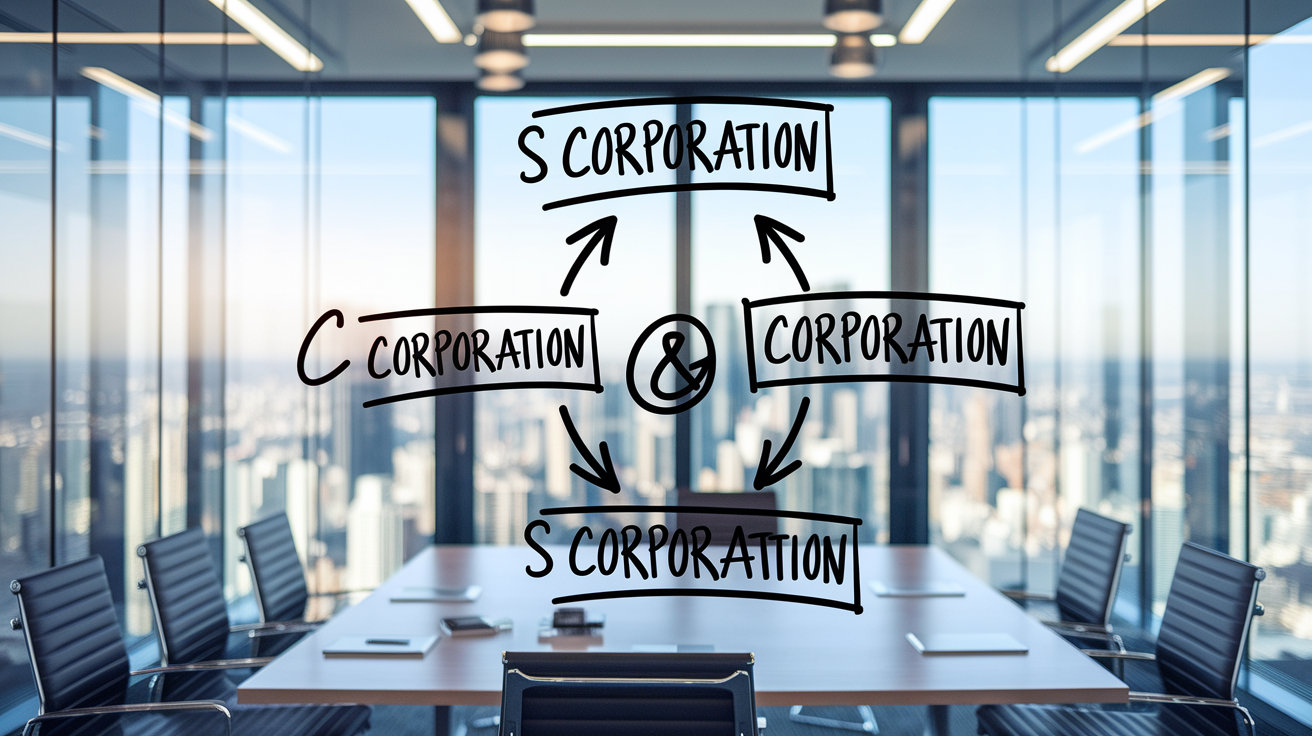
Entity classification matters from day one. Only C-corporation stock qualifies as QSBS. If your company operated as an S corporation, stock issued during the S-election period never qualifies. Doesn’t matter how long you hold it. Stock issued after a valid S-to-C conversion can qualify, but the five-year clock starts on the date of issuance after conversion, not the date you first received S-corp shares.
Parent-subsidiary structures trigger aggregation rules that can push you over the $50 million asset test. Section 1202(d)(3) modifies the Section 1563 controlled-group definitions and treats corporations in a parent-subsidiary controlled group (ownership above 50%) as a single corporation. If your target company owns 60% of a subsidiary with $25 million of assets, and the parent holds $30 million, the combined $55 million aggregate disqualifies new stock issuances in both entities. Always map ownership before closing a funding round.
Recapitalizations and reorganizations can preserve or destroy QSBS eligibility depending on the facts. A tax-free reorganization under Section 368 or a Section 351 property transfer can allow shareholders to roll their QSBS holding period into stock of the surviving or acquiring corporation under Section 1202(h)(4). But if the IRS recharacterizes a recapitalization as a disguised redemption under step-transaction or substance-over-form doctrines, the original-issuance rule fails. Strong authority exists to protect bona fide recaps. Aggressive structures (especially those layering holding companies or liquidating appreciated subsidiaries) invite challenge.
Redemptions directly threaten QSBS status under Section 1202(c)(3). If the corporation redeems your stock or the stock of a related person within four years before or two years after your acquisition, and the redemption is significant relative to total equity, your stock may lose QSBS treatment. Liquidity programs that buy back shares from employees or early investors must be timed carefully to avoid tainting later issuances.
Transaction Timing Rules and Key Windows in a Section 1202 Sale Plan

The five-year holding period is the hardest deadline. You must hold the stock for more than five years, measured from the exact date of issuance to the date of sale. “More than” means five years plus one calendar day. If you received stock on March 15, 2020, the earliest qualifying sale date is March 16, 2025. Selling one day early disqualifies the entire gain from exclusion. Mark the date in your calendar and verify it against the stock ledger, not your memory.
Redemption windows run on their own clocks. Section 1202(c)(3) tests whether the corporation redeemed stock from you or a related person during a four-year period (two years before and two years after your stock issuance) or whether “significant redemptions” occurred in a two-year window (one year before and one year after). If your company runs an employee liquidity program, get the redemption schedule and cross-check it against every shareholder’s issuance dates before finalizing new stock grants.
Pre-sale reorganizations can preserve your holding period if structured under Section 1202(h)(4). A tax-free exchange under Section 368 or a Section 351 incorporation lets you roll your QSBS into the acquiring company’s stock and tack your holding period. If you’ve held QSBS for four years and the company merges into an acquirer, you can potentially reach the five-year threshold in the acquiring company’s stock. Model this early in acquisition discussions.
Funding rounds immediately after your issuance can be collapsed under the step-transaction doctrine. If you receive QSBS in a seed round and the company closes a Series A two months later that pushes aggregate gross assets over $50 million, the IRS may treat the two rounds as a single issuance and disqualify your stock. Space capital raises at least six months apart when possible and document independent business purposes for each round.
Plan a minimum six-month lead time before any sale. Use the time to verify each checklist item, assemble documentation, model gain exclusions for every selling shareholder, review entity structure for controlled-group issues, and coordinate with your tax advisor. The checklist below maps the sequence:
Verify exact stock issuance date and confirm five-year holding period will be met by intended sale date. Confirm corporation was a C corporation at issuance and remains one through sale. Assemble financial records proving aggregate gross assets were $50 million or less immediately after issuance. Review cap table and redemption history for Section 1202(c)(3) taint issues within the four-year and two-year windows. Document active business operations during substantially all of the holding period (minimum 80% asset use test). Calculate per-taxpayer exclusion using both the $10 million cap and the 10× basis formula, reduce by any prior QSBS exclusions from the same corporation.
Section 1045 Rollover Strategy If QSBS Exclusion Cannot Be Claimed

Section 1045 lets you defer gain if you can’t claim the Section 1202 exclusion yet. The rule allows you to sell QSBS that you’ve held for more than six months (but not necessarily five years) and roll the proceeds into replacement QSBS within 60 days. The rolled gain is deferred, and your holding period in the replacement stock includes the holding period of the old stock for purposes of meeting the five-year test later.
The rollover has six requirements you must meet before the 60-day window closes:
You must have held the original QSBS for more than six months before selling it, even though the five-year test isn’t met yet. You must purchase replacement stock that qualifies as QSBS (original issuance from a C corporation meeting the $50 million asset test and active business requirement) during the 60-day period beginning on the date you sold the original QSBS. The replacement stock must be issued by a different corporation than the one whose stock you sold. You can’t roll proceeds back into the same issuer. You must recognize gain only to the extent your sale proceeds exceed the cost of the replacement QSBS purchased within 60 days. If you reinvest all proceeds, you defer all gain. Your adjusted basis in the replacement QSBS is reduced by the amount of deferred gain, preserving the tax liability for a future sale. Partnerships can use Section 1045 only if all partners held their partnership interest when the partnership acquired the original QSBS. Transfers of partnership interests or QSBS into a partnership after issuance typically destroy eligibility.
Use this strategy when you need liquidity before reaching the five-year mark or when the original issuer no longer qualifies as QSBS due to a change in business activity or asset composition. The replacement stock restarts the active business and asset tests, so choose the new investment carefully. Model the deferral to confirm the replacement stock will meet all QSBS requirements when you eventually sell it.
State-Level Treatment of QSBS and Multi-Jurisdiction Sale Planning

Federal QSBS exclusion does not automatically flow through to state income taxes. Many states don’t conform to Section 1202, and a growing number have explicitly decoupled from the federal exclusion. Even if your stock qualifies at the federal level, you may owe full state capital gains tax on the same sale.
California, New York, New Jersey, Massachusetts, and Pennsylvania are among the states that don’t allow the QSBS exclusion or allow only a partial exclusion. A California resident who excludes $10 million of federal gain will still owe California tax on that $10 million at the state’s top rate (currently over 13% for high earners). Alabama, Hawaii, Mississippi, New Jersey, and Pennsylvania have all decoupled in different ways. Some states conform to a percentage of the federal exclusion but cap it at older, lower thresholds.
Map your state exposure early. If you’re a resident of a non-conforming state, model the state tax liability separately and include it in your net proceeds calculation. If you have flexibility over timing or residency, evaluate whether relocating to a no-income-tax state (such as Florida, Texas, Nevada, or Washington) before the sale makes sense. Changing residency for tax purposes requires careful planning, and you must establish domicile well in advance of the sale to avoid a challenge. Separately, check whether the corporation’s state of incorporation or principal place of business creates additional filing requirements or disallowances.
Common QSBS Pitfalls, IRS Audit Triggers, and Anti-Abuse Doctrines

The IRS enforces Section 1202 requirements strictly. Several issues appear repeatedly in audits and disputes. Missing or incomplete documentation is the most common problem. If you can’t prove the exact date of original issuance or demonstrate that aggregate gross assets were below $50 million at that moment, the exclusion fails. Assemble and store records when the stock is issued, not years later when you’re preparing to sell.
The list below covers frequent traps:
Failing to verify the $50 million gross asset test at the precise moment of issuance, especially when property is contributed at fair market value or when multiple funding rounds occur close together. Transferring QSBS into a partnership after original issuance, which destroys the partnership’s status as an original holder under the Treasury regulations. Overlooking parent-subsidiary or controlled-group aggregation, which can push combined assets over the $50 million threshold even when each standalone entity appears to qualify. Structuring redemptions or buybacks that trigger Section 1202(c)(3) taint by redeeming stock from the taxpayer or a related person within the prohibited windows.
Missing the active business requirement during part of the holding period, often due to a shift toward passive investments, real estate holdings, or sale of operating assets. Ignoring changes to the adjusted basis calculation under Section 174 (research and experimental expenditures must be capitalized and amortized for tax years beginning after December 31, 2021, which can reduce tax basis and affect the $50 million test). Relying on equity valuation instead of adjusted tax basis when measuring aggregate gross assets, leading to an incorrect belief that high-valuation financings automatically disqualify the stock.
Beyond documentation gaps, the IRS may invoke judicial doctrines to recharacterize transactions that lack economic substance or business purpose. The step-transaction doctrine (applied in cases such as Penrod) can collapse multiple steps into a single transaction, turning what looks like separate qualifying events into a disqualifying integrated plan. Substance-over-form principles (rooted in Gregory v. Helvering) allow the IRS to disregard the legal form of a transaction and tax it according to its economic reality. If you layer holding companies or structure recapitalizations primarily to multiply QSBS benefits without underlying business rationale, expect scrutiny. Cases like Esmark and Tracinda illustrate that the IRS will challenge arrangements that appear designed solely for tax avoidance.
Plan every step with clear business purpose and contemporaneous documentation. Record board minutes, business justifications, and third-party valuations at each stage. If a funding round, reorganization, or redemption serves only to preserve QSBS status, it may not survive challenge.
Pre-Sale QSBS Planning Workflow for Founders, Investors, and Advisors

Start QSBS planning at least six months before a sale conversation begins. Early preparation ensures you can fix documentation gaps, model exclusions accurately, coordinate among multiple shareholders, and identify any disqualifying issues while you still have time to address them. The workflow below breaks planning into six steps.
Assemble the full issuance record for each shareholder and each stock grant or purchase. Collect subscription agreements, wire receipts, corporate resolutions, cap tables, and financial statements showing gross assets at issuance. Create a folder for each issuance date and label it with the shareholder name, date, and share count.
Verify the five-year holding period for every selling shareholder. Calculate the earliest qualifying sale date (issuance date plus five years and one day) and mark it on a shared calendar. If any shareholder hasn’t yet reached five years, evaluate whether a Section 1045 rollover or a Section 368/351 reorganization can preserve the holding period.
Run the aggregate gross assets test for each issuance. Pull fixed-asset schedules and tax basis records as of the issuance date. If property was contributed at issuance, confirm that fair market value was used as the adjusted basis under Section 1202(d)(2)(B). Check whether the corporation is part of a controlled group and aggregate assets if required.
Model the exclusion for each taxpayer using both formulas: $10 million minus prior QSBS exclusions from that corporation, and ten times adjusted basis in the QSBS being sold. Use the greater amount. Sum exclusions across all selling shareholders and compare against total expected gain to understand the tax efficiency of the sale.
Map redemption history and test for Section 1202(c)(3) taint. Review every redemption, buyback, and repurchase over the four-year window (two years before and two years after each shareholder’s issuance) and the two-year window for significant redemptions. Flag any issues and discuss curative steps (such as delaying the sale or excluding tainted shareholders from the transaction).
Coordinate entity structure and transaction mechanics with co-counsel. If the sale involves a merger, asset purchase, or reorganization, confirm that the structure preserves QSBS status for qualifying shareholders. Draft side letters or allocation provisions to ensure that QSBS benefits aren’t forfeited by the deal structure.
Use this workflow to surface every eligibility question before the first draft of the purchase agreement circulates. Buyers won’t adjust pricing or terms to compensate for QSBS disqualification discovered during diligence. If you find a problem early, you can restructure the cap table, adjust the transaction timeline, or negotiate a price that reflects the actual after-tax proceeds.
Final Words
Verify the four mandatory QSBS tests now: original issuance, $50M gross assets at issuance, active business during the holding period, and the five-year holding requirement. Pull the docs and run the exclusion math.
Also check corporate events, timing windows, Section 1045 options, and state rules — those can change eligibility. Watch common pitfalls like missing proof, redemptions, or aggregation issues.
Use this QSBS section 1202 sale planning checklist to organize records, model outcomes, and prep questions for your CPA. Do it before you sign any deal — it helps reduce tax surprises and boost your chances of keeping more of the gains.
FAQ
Q: What are the mandatory QSBS tests I must verify before a sale?
A: The mandatory QSBS tests are original issuance from a C corporation, the $50M aggregate gross assets limit at issuance, an active business test during most of your holding period, and a five‑year holding period.
Q: How do I prove original issuance and the $50M gross assets test?
A: To prove original issuance and the $50M test, gather subscription agreements, cap table, corporate minutes, and financials showing adjusted basis or fair market value at issuance; the $50M cap uses those asset values.
Q: What counts as meeting the active business requirement during the holding period?
A: Meeting the active business requirement means the company must use most assets in an active trade or business for substantially all of your holding period, not as passive investment holdings.
Q: How long must I hold QSBS to qualify for Section 1202?
A: You must hold the QSBS for more than five years to meet the Section 1202 holding‑period test; track acquisition and sale dates to prove the full five‑year span.
Q: How do I calculate the Section 1202 exclusion and its limits?
A: The Section 1202 exclusion is the greater of $10,000,000 minus prior QSBS exclusions from that issuer, or ten times your adjusted basis; examples: $0 basis → $10M cap; $5M basis → $50M cap.
Q: Which documents should I assemble before planning a Section 1202 sale?
A: Assemble subscription/purchase agreements, wire receipts, cap table, corporate minutes, financial statements at issuance, basis records, valuation reports, and tax returns proving business activity and holding dates.
Q: How does state tax treatment affect my QSBS planning?
A: State tax treatment can differ widely; many states deny federal QSBS benefits, so check each jurisdiction’s rules and model state tax owed separately from the federal exclusion.
Q: What corporate events can destroy or preserve QSBS status?
A: Corporate conversions to S corp, redemptions, reorganizations, or parent‑subsidiary aggregation can taint QSBS; some reorganizations preserve holding periods, but conversions and >50% aggregation risk disqualification.
Q: What timing windows and checkpoints should I watch in a QSBS sale plan?
A: Watch your five‑year holding clock, four‑ and two‑year redemption lookbacks, closing dates of financing rounds, and 60‑day Section 1045 reinvestment windows to avoid step‑transaction risks.
Q: When should I consider a Section 1045 rollover and how does it work?
A: Consider Section 1045 when you can’t claim exclusion and will reinvest proceeds into new QSBS within 60 days; it defers gain and can preserve original holding period if replacement stock qualifies.
Q: What common pitfalls trigger IRS audits of QSBS claims?
A: Common audit triggers include missing original issuance proof, incorrect asset valuations for the $50M test, failing the active business test, redemptions close to sale, and step‑transaction setups.
Q: What simple pre‑sale workflow should founders, investors, and advisors follow?
A: First gather issuance and asset records, model $10M vs 10× basis outcomes, confirm active business and holding period, coordinate shareholders, and consult a tax pro before executing the sale.

