

Think selling a rental is just listing the place and signing a contract? Think again.
Depreciation recapture, capital gains, and missed deductions can eat 25–35% of your sale proceeds — often because records and basis adjustments weren’t handled early.
This pre‑sale tax checklist shows the specific steps to organize records, calculate adjusted basis, forecast liabilities, and explore deferral options before you list.
Follow these steps now to reduce surprises, plan with your tax pro, and keep more of what you earn.
Pre‑Sale Tax Checklist: Start Here

Selling rental property without a tax plan costs you. Depreciation recapture, capital gains, and missed deductions can eat 25–35% of your proceeds. Most of that loss? It comes from incomplete documentation, unclear basis adjustments, and planning steps you could’ve handled months earlier.
Your pre‑sale checklist starts the day you decide to sell. Not the day before closing. The work centers on organizing records, calculating adjusted basis, forecasting liabilities, and exploring deferral strategies. Each item affects how much you actually keep.
Eight items for your pre‑sale checklist:
- Pull depreciation records for every year you owned the property, including years where depreciation was allowed but never claimed.
- Gather invoices, receipts, and proof of payment for every capital improvement since purchase.
- Collect closing statements from your purchase and any refinances to verify original basis and loan payoffs.
- Separate repair expenses from improvement expenses and document how you classified each one.
- Calculate current adjusted basis using purchase price, improvements, and accumulated depreciation.
- Forecast capital gains and depreciation recapture tax using updated sale price estimates.
- Evaluate 1031 exchange eligibility if you’re planning to acquire replacement property within required deadlines.
- Schedule a tax advisor meeting at least 60 days before your expected listing date to review strategies and required filings.
Understanding Depreciation Recapture Obligations

Depreciation recapture is the second tax bill most sellers forget. Every dollar of depreciation you claimed during ownership reduces your basis and creates ordinary income tax when you sell. The IRS taxes recaptured depreciation at your regular income tax rate, up to a maximum 25% federal rate. And it applies even if you never filed a depreciation deduction.
Residential rental property depreciates over 27.5 years. If you owned the property for five years and took $27,273 in depreciation deductions, that full amount gets recaptured at sale and reported on IRS Form 4797. If you owned the property but skipped depreciation because you didn’t know it was allowed, the IRS still treats you as if you claimed it. The rule’s simple: depreciation recapture applies to the greater of actual depreciation taken or depreciation allowed under law.
Recapture tax is calculated separately from capital gains. Your gain splits into two parts: recaptured depreciation taxed as ordinary income and remaining gain taxed at long‑term capital gains rates. That split changes your effective tax rate and total liability. Knowing the recapture amount before you list helps you budget for the final tax bill and avoid surprise shortfalls at filing.
Four common depreciation recapture mistakes:
- Forgetting to track depreciation when no deduction was claimed on past returns.
- Assuming repairs reduce recapture when only capitalized improvements affect basis.
- Mixing land value into the depreciation calculation, which is never depreciated.
- Filing Schedule D without completing Form 4797 first, triggering IRS matching notices.
Evaluating 1031 Exchange Eligibility and Requirements

A 1031 exchange defers capital gains and depreciation recapture taxes by reinvesting proceeds into replacement investment property. The trade off is strict deadlines, mandatory use of a qualified intermediary, and like‑kind property requirements. If you meet every rule, you push taxes into the future and preserve capital for the next acquisition.
The IRS requires you to identify potential replacement properties within 45 days of your sale closing and complete the purchase of at least one replacement within 180 days. The replacement property must be equal or greater in value, and all sale proceeds must flow through the qualified intermediary. Not your bank account. Any cash or net equity you take out becomes taxable boot in the year of sale. Personal‑use properties, fix‑and‑flip inventory, and primary residences don’t qualify for 1031 treatment.
Five factors determining 1031 exchange eligibility:
- Both relinquished and replacement properties must be held for investment or business use, not personal use or resale inventory.
- You must use a qualified intermediary to hold proceeds between sale and purchase.
- Replacement property value and debt must equal or exceed relinquished property to defer 100% of gain.
- You can’t receive sale proceeds directly or control funds during the exchange period.
- Identification and closing deadlines are calendar days with no extensions, regardless of weekends or holidays.
Adjusting Property Basis Before Sale
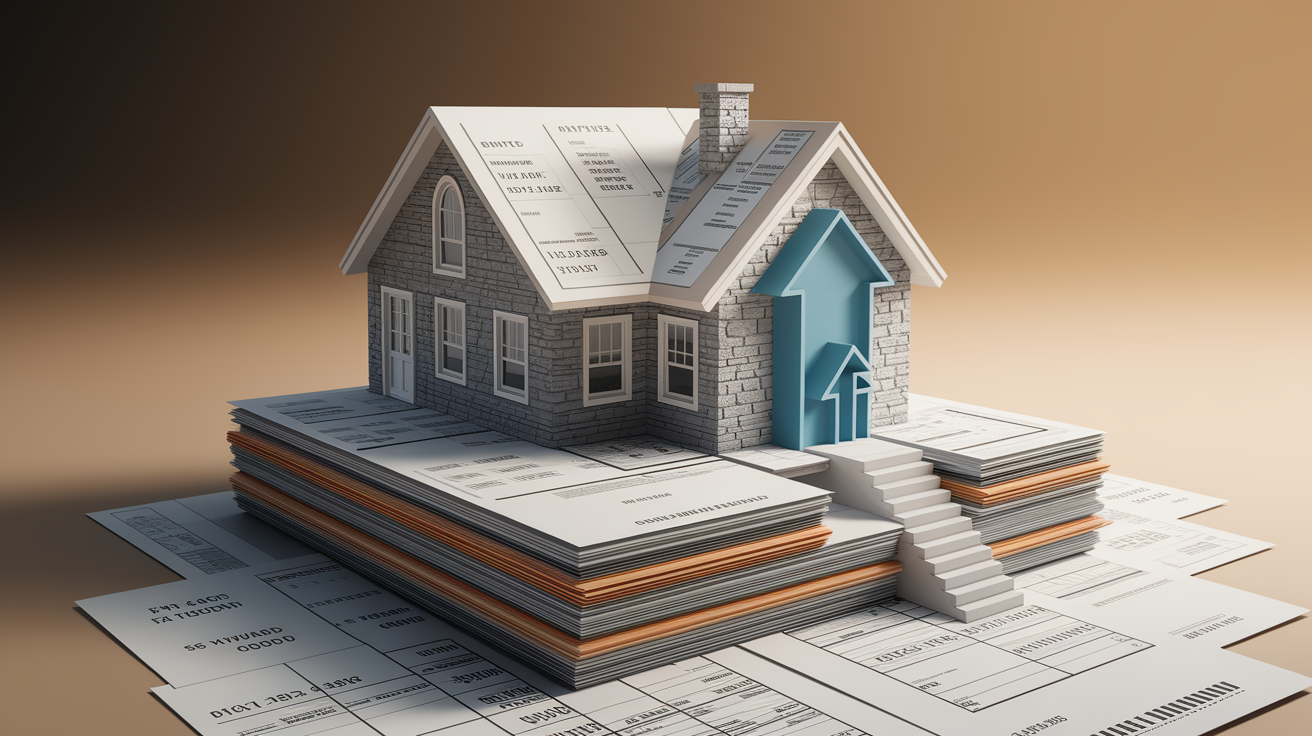
Adjusted basis determines how much of your sale price becomes taxable gain. The formula starts with your original purchase price, adds capital improvements and certain acquisition costs, then subtracts accumulated depreciation. Every dollar of basis you can prove reduces your tax bill. That’s why documentation matters more than memory.
Capital improvements increase basis. Repairs don’t. If you installed a new roof, upgraded HVAC systems, remodeled kitchens or bathrooms, replaced flooring throughout, added square footage, or paved a driveway, those costs increase basis. If you patched a roof leak, fixed a broken furnace, painted walls, replaced a single appliance, or cleaned carpets, those are repairs. The difference isn’t about cost. It’s about whether the work adds value, adapts the property to a new use, or restores it after the end of its useful life.
Six capital improvement examples that increase basis:
- Full roof replacement.
- New HVAC system or furnace installation.
- Kitchen or bathroom remodels including cabinets, countertops, and plumbing fixtures.
- Structural additions such as a new deck, garage, or room addition.
- Driveway paving or major landscaping installations.
- Electrical panel upgrades or whole‑home rewiring.
Closing costs from your original purchase may also increase basis. Title insurance, attorney fees, recording fees, transfer taxes, and survey costs all qualify. Loan origination fees and points paid to secure financing are usually capitalized, not expensed. The same logic applies to selling costs: real estate commissions, legal fees, title insurance, and staging costs reduce the amount realized at sale, lowering your gain.
Correctly Categorizing Repairs vs. Improvements

The IRS distinguishes repairs from improvements using the BAR test: Betterment, Adaptation, or Restoration. If the work makes the property materially better than before, adapts it to a new use, or restores it after the end of its useful life, it’s a capital improvement that must be capitalized and depreciated. If the work keeps the property in ordinary operating condition without adding value, it’s a repair you can deduct immediately.
Betterment means the work increases value, adds functionality, or improves efficiency beyond the previous state. Adaptation means the work changes the property’s use. Restoration means the work brings a component back after it was retired or substantially damaged. Common examples: replacing a few shingles is a repair. Replacing the entire roof is betterment. Fixing a broken window is a repair. Replacing all windows with energy‑efficient models is betterment. Painting a room is a repair. Remodeling the entire interior is restoration or betterment.
Five classification indicators:
- Work that extends the property’s useful life typically qualifies as an improvement.
- Replacement of an entire system or structural component usually triggers capitalization.
- Routine maintenance or fixes to keep the property running are repairs.
- Projects bundled together as part of a remodel or renovation are often capitalized as a single improvement.
- Work performed immediately after purchase to bring the property to rentable condition may be capitalized as part of acquisition costs.
Forecasting Capital Gains Tax Before Selling

Capital gains equal your sale price minus adjusted basis minus selling costs. The tax you owe depends on your holding period, your marginal income tax bracket, and whether the property qualifies for long‑term rates. Depreciation recapture is taxed separately, so your total tax bill includes both the recapture portion and the remaining gain.
Long‑term capital gains rates apply when you hold property for more than one year. Federal rates for 2025 are 0%, 15%, or 20%, determined by your taxable income. Short‑term gains are taxed as ordinary income at rates between 10% and 37%. Selling one day before the one‑year mark converts your entire gain to ordinary income, raising your effective tax rate by 10–20 percentage points in most cases.
Depreciation recapture is taxed at your ordinary income tax rate, capped at 25% federally. If your marginal rate is 24%, recapture is taxed at 24%. If your rate is 32%, recapture is taxed at 25%. The remaining gain after recapture is taxed at long‑term rates if you held the property longer than one year. Combining recapture tax and capital gains tax gives you the total federal liability before state taxes and Net Investment Income Tax.
| Holding Period | Applicable Rate | Notes |
|---|---|---|
| One year or less | 10%–37% (ordinary income) | Entire gain taxed at marginal income tax rate; no preferential treatment. |
| More than one year | 0%, 15%, or 20% (long‑term capital gains) | Rate depends on taxable income; depreciation recapture taxed separately at up to 25%. |
| Any period (recapture portion) | Up to 25% (ordinary income, capped) | Applies to all claimed or allowable depreciation; reported on Form 4797. |
Required Tax Forms and Documentation to Prepare

Accurate tax reporting starts with complete documentation assembled before you list the property. Missing receipts, incomplete depreciation schedules, and lost closing statements create estimate‑based filings that invite IRS scrutiny and higher tax bills. Organize records now to avoid scrambling after closing.
Seven essential documents for rental property sales:
- Original purchase closing statement showing purchase price, land allocation, title fees, and attorney costs.
- Annual depreciation schedule detailing total depreciation claimed or allowed each year.
- Receipts and invoices for all capital improvements, including contractor names, dates, scope of work, and payment proof.
- Repair and maintenance logs categorizing each expense as repair or improvement.
- Selling costs documentation covering commissions, legal fees, title insurance, staging, and advertising.
- Loan payoff statements and refinance settlement statements showing outstanding debt and interest paid.
- Rent rolls and lease agreements if selling to another investor or converting use before sale.
Form 4797 reports depreciation recapture and business property sales. Schedule D reports capital gains after recapture is separated. Form 1099‑S is issued by the closing agent when the sale price exceeds reporting thresholds, and a copy goes to the IRS. If you complete a 1031 exchange, Form 8824 reports the exchange details and deferred gain. All forms tie together using your adjusted basis, accumulated depreciation, and final sale proceeds. Inconsistent numbers between forms trigger matching notices and potential audits.
Timing Strategies to Reduce Taxes

Timing your sale changes which tax year reports the gain, which rates apply, and how much you owe. Selling one day after your one‑year ownership anniversary converts short‑term rates to long‑term rates and cuts your effective tax rate by 10–20 percentage points. Delaying closing by a few weeks can shift the transaction into the next calendar year, giving you 12 additional months to prepare estimated payments or complete a 1031 exchange.
Bunching income and deductions into separate years reduces taxable income in the sale year. If you expect lower income next year, closing in January instead of December pushes the gain into a lower‑bracket year. If you have capital losses from other investments, selling in the same year lets you offset gains and reduce total tax. Market conditions also influence timing. Rising interest rates reduce buyer demand and investor pricing, shrinking your net proceeds even if you save on taxes.
Five timing tactics:
- Hold the property at least one year and one day to qualify for long‑term capital gains rates.
- Close in a low‑income year when your marginal tax bracket drops or when you have offsetting capital losses.
- Delay closing until January to defer gain recognition into the next tax year and extend payment deadlines.
- Sell before major improvements are completed if you want to expense the costs as repairs instead of capitalizing them.
- Coordinate sale timing with estimated tax payment deadlines to avoid underpayment penalties.
When to Consult Tax Professionals

Tax professionals model scenarios, verify deductions, calculate recapture, and prepare accurate filings that reduce liability and audit risk. Their value increases when your situation involves multiple properties, 1031 exchanges, partial conversions to primary residence, foreign property sales, or state withholding requirements. Errors cost more than professional fees.
Hire a CPA or enrolled agent experienced in real estate transactions at least 60 days before you list the property. Early engagement gives them time to review your records, identify missing documentation, and recommend strategies that lower your tax bill. Late engagement forces rushed filings, estimate‑based reporting, and missed opportunities.
Four scenarios requiring expert help:
- Planning or executing a 1031 exchange with multiple properties or tight deadlines.
- Converting rental property to primary residence and claiming the Section 121 exclusion.
- Selling property located in a different state or foreign country, triggering withholding and credit filings.
- Owning property in an LLC, partnership, or S corporation where depreciation recapture and basis adjustments affect multiple partners or shareholders.
State‑Specific Tax Considerations
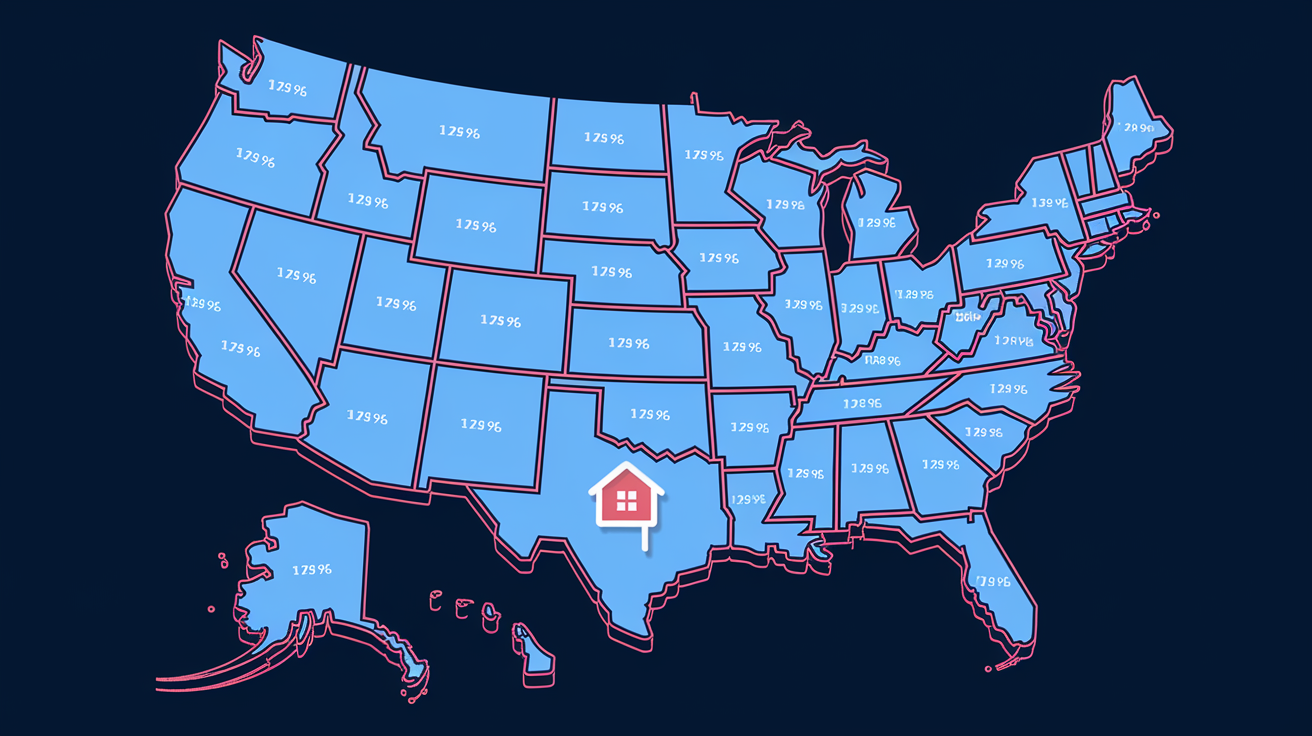
State capital gains taxes vary widely. Some states have no income tax and no capital gains tax. Others tax gains as ordinary income at rates between 3% and 13%. A few states require withholding at closing if you’re a non‑resident seller, holding a percentage of proceeds until you file a state return proving your actual liability.
Non‑resident sellers face additional complexity. If you own rental property in a state where you don’t live, that state may require estimated tax payments, withholding at closing, or separate non‑resident filings. California withholds 3.33% of the sale price for non‑residents. New York requires estimated payments within 15 days of closing. Each state publishes its own rules, forms, and deadlines that don’t align with federal timelines.
Residency rules determine which state taxes your gain. If you live in one state and sell property in another, both states may claim taxing authority. Your home state usually allows a credit for taxes paid to the property state, but the credit only covers the lower of the two tax amounts. Double taxation happens when your resident state’s rate exceeds the property state’s rate and no full credit is allowed.
Final Words
In the action, you got a step-by-step pre-sale tax checklist: depreciation recapture prep, 1031 exchange basics, adjusted basis adjustments, repairs vs. improvements, capital gains forecasting, required forms, timing tactics, and state rules.
Use this pre-sale tax checklist for selling rental property as your runbook before you list. Gather closing statements, depreciation records, and improvement receipts. Estimate gains and flag recapture or 1031 deadlines. When in doubt, ask a CPA. Do this and you’ll reduce surprises and keep more of your sale proceeds.
FAQ
Q: What documents do you need for taxes when you sell a rental property?
A: The documents you need for taxes when you sell a rental property include the closing statement (HUD/ALTA), Form 1099‑S, purchase paperwork, depreciation schedule, receipts for improvements and repairs, and selling‑cost records.
Q: What is the 50% rule in rental property?
A: The 50% rule in rental property is a quick rule of thumb: expect about half of gross rent will go to operating expenses, excluding mortgage payments and depreciation, useful for deal screening.
Q: How do I avoid paying taxes when I sell my rental property?
A: To avoid paying taxes when you sell your rental property, you can defer or reduce taxes with a 1031 exchange, increase adjusted basis via capital improvements, time the sale for long‑term rates, or offset gains with losses; consult a CPA.
Q: What is the 80/20 rule for rental property?
A: The 80/20 rule for rental property is a Pareto heuristic: about 80% of income, problems, or value often comes from 20% of units or tenants, so focus effort on that high‑impact minority.

